

A graphic-led T-shirt and a jacket with a distinctive panel shape do not necessarily need the same development process. The useful question is which parts of the garment must change.
Separate your non-negotiables from preferences: fit, fabric, construction, decoration and delivery constraints. A route is useful when it can meet that brief—not because its name sounds more premium.
Cut and sew meaning: from fabric to garment
Cut and sew describes making a garment by cutting fabric into pieces and sewing those pieces together. The U.S. Census Bureau’s classification includes both ready-to-wear and custom apparel made from woven or purchased knit fabric.[1]
In brand sourcing, “custom cut and sew” usually means commissioning garment development and manufacture to an agreed specification, rather than purchasing a finished blank. Those meanings overlap: a blank T-shirt can itself be a cut-and-sewn product. The comparison is about where your project enters the process.

There is also a middle route: a factory may offer an existing pattern or product base that it can modify. Specify exactly what changes—body length, fit, material, pocket, rib or another component—and ask what must be redeveloped and sampled. An existing block is a starting point, not proof that every modification is feasible.
Ask for deliverables, not just a label
Suppliers use terms such as “private label,” “white label” and “custom” differently. Ask who supplies the pattern and fabric, what can change, which samples are included and which files or approvals you will receive.
Compare three production routes
Read this as a scope comparison. Actual capabilities depend on the garment, materials, decorator and supplier.
| Decision | Finished blanks | Adapt an existing pattern | Develop a new pattern |
|---|---|---|---|
| Starting point | A named, already-made garment. | A supplier’s identified base pattern or style. | Your design brief and a newly developed pattern. |
| Fit & silhouette | Select from existing styles and sizes. Alterations require a separate scope. | Agree which measurements and shapes may change. | Develop and review the intended shape through samples. |
| Fabric & color | Choose the garment’s listed options and available stock. | Confirm permitted materials and any new sourcing requirements. | Specify requirements, then verify sourcing and production feasibility. |
| Construction | Existing seams, pockets, neck and hems are already set. | Confirm each modification and its effect on the base pattern. | Define construction, components and assembly requirements. |
| Decoration & labels | Test the chosen garment with the proposed process. | Confirm placement and production sequence on the modified sample. | Plan artwork and components alongside garment development. |
| Evidence to approve | Exact blank, decorated sample and required information labels. | Modified fit, actual materials and final construction. | Fit, materials, construction, decoration and the approved specification. |
None of these routes guarantees quality. A suitable blank with well-tested decoration can meet a brief; a custom garment still needs development and inspection. Compare actual samples and requirements, not the prestige of the production label.
Check what blanks already offer
Do not assume that choosing blanks means accepting one generic weight or fit. As a concrete example, the following AS Colour UK catalog styles list different fabric weights and silhouettes.[2][3][4]
Official product-page specifications · UK catalog
Three existing T-shirts, three listed fabric weights
Grams per square meter
GSM / g/m²
| Style | Listed fabric weight | Listed fit |
|---|---|---|
| Staple Tee 5001 | 180 GSM | Regular |
| Classic Tee 5026 | 220 GSM | Regular |
| Heavy Tee 5080 | 280 GSM | Relaxed |
The practical lesson is to inspect the catalog and a physical sample before deciding that your garment must be developed from scratch. Check the complete composition for the chosen color, measurements, construction and availability. A similar GSM does not establish a similar fit or feel. The fabric GSM guide explains what the weight number can and cannot tell you.
Compare development work, quantity and timing
Separate development charges from repeat-order costs
For blanks, identify the garment SKU, decoration setup, application, label work and packing. For a modified or new pattern, also identify the work needed for patterns, samples, material development and revisions. Ask which charges recur and which are specific to this development round.
Compare quotes for the same quantities, size/color split, decoration, packaging and delivery basis. A lower garment price is not a like-for-like result if required work is excluded. Avoid assuming that custom is always more expensive per unit, or that blanks always produce the lowest total project cost.
Ask what actually creates the minimum
A garment order, fabric color, trim, decoration process and packaging item can each have its own constraint. Ask whether a minimum applies per style, color, process or total order, and whether buying available materials changes it. There is no useful universal quantity threshold that automatically selects a route. Use the clothing MOQ guide for the detailed quantity questions.
Build the schedule from confirmed dependencies
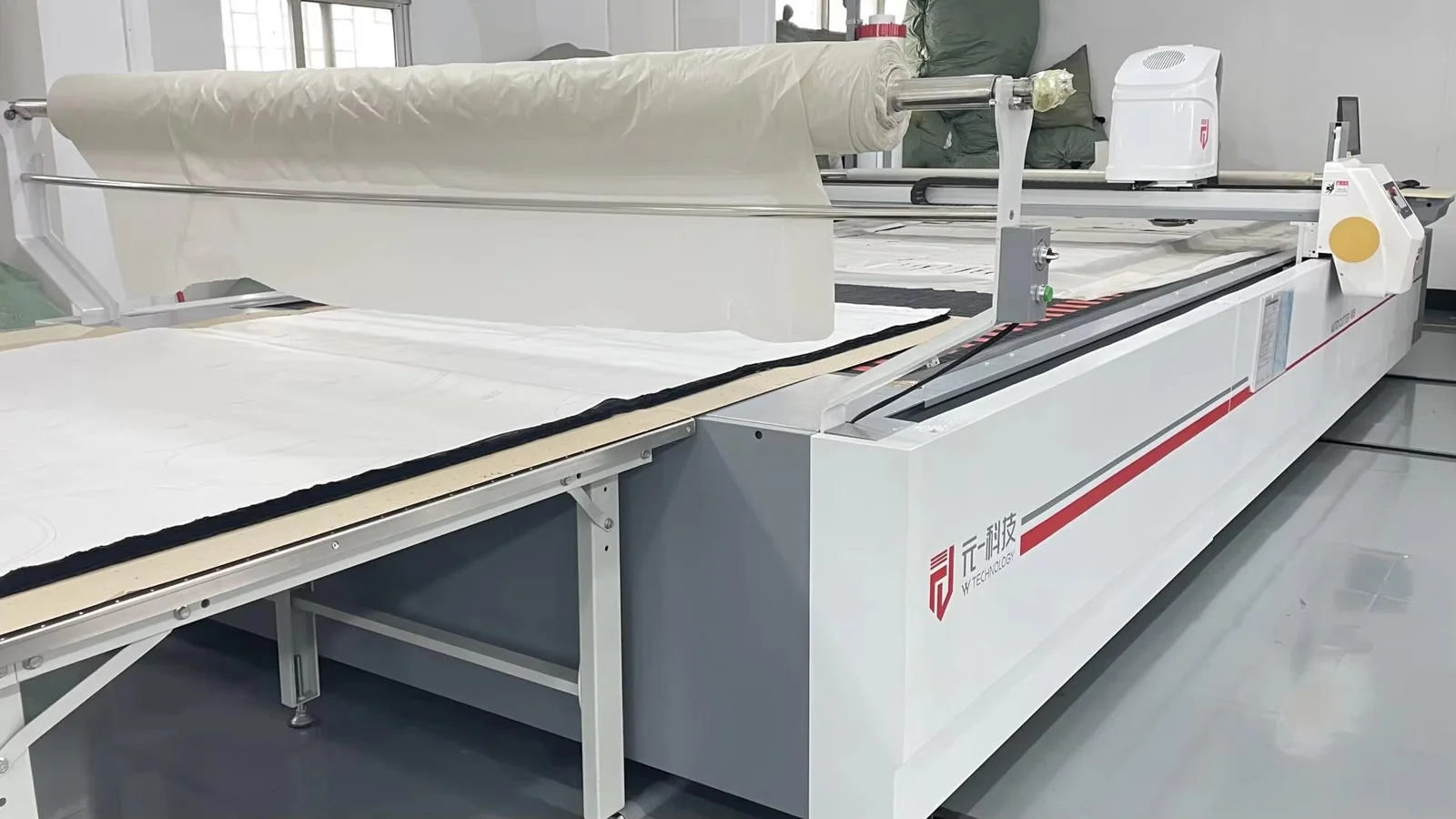
A stocked blank can remove pattern development from your project, but it does not remove decoration, sample approval or delivery. Check stock in every required size and color, the replenishment plan and the decorator’s capacity. For example, AS Colour’s UK FAQ says adding garments to a cart does not reserve them.[5] For pattern development, identify who must approve fit, materials and revisions before production is scheduled.
Ask for dated milestones tied to those inputs. “Needed by our launch date” is a constraint to discuss, not evidence that a route can meet it. If the dates do not work, simplify the brief, change the route or move the launch before placing the order.
Three briefs, three possible starting points
These fictional examples illustrate the decision. They are not actual customer projects, quoted prices or guaranteed outcomes.
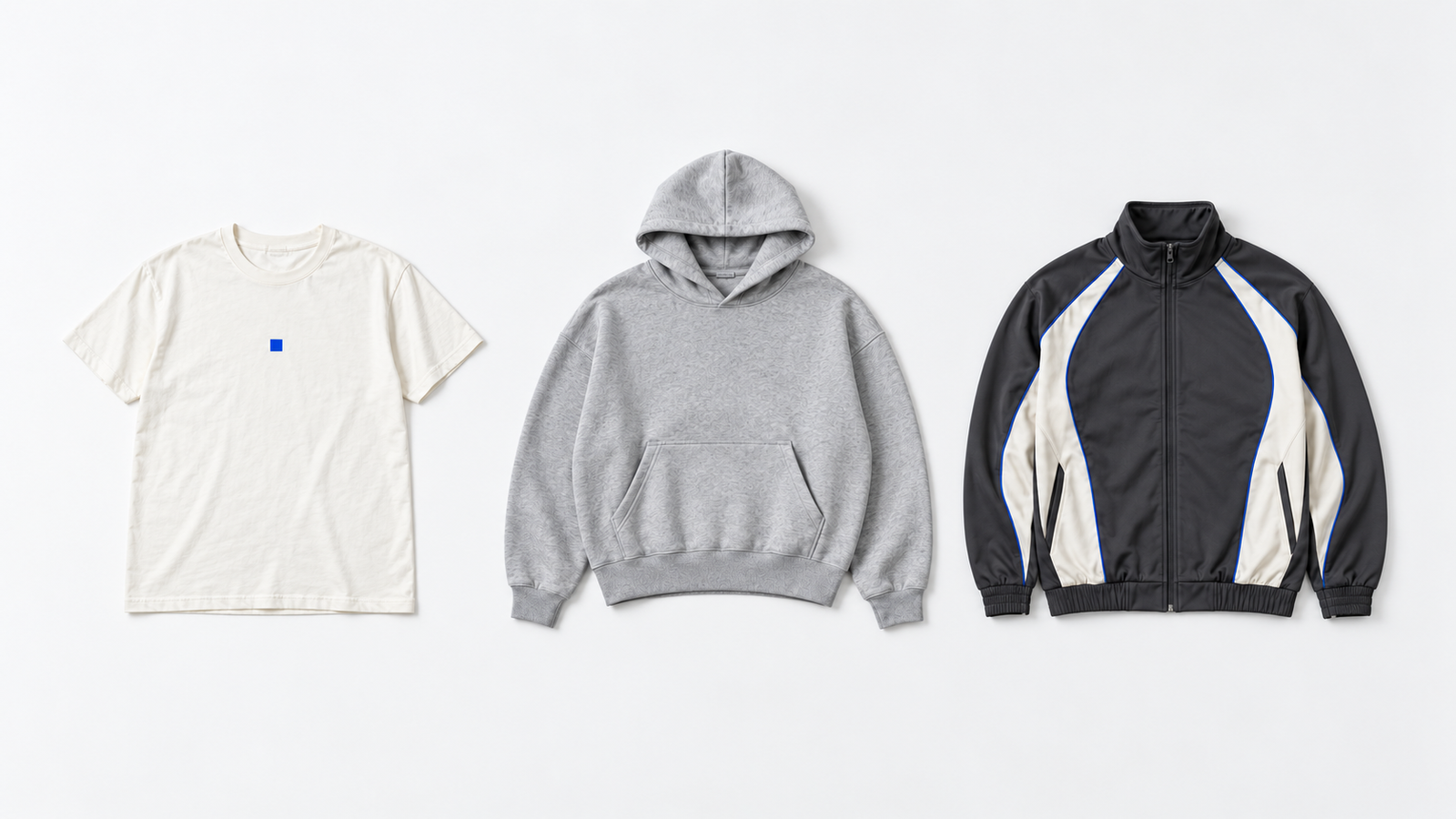
A graphic-led first release
The brand approves an existing tee’s fit, fabric and color. Its distinctive feature is a chest graphic. Start by testing that blank with the intended decoration. Confirm stock, graphic placement, print performance and labeling. A new pattern would need a specific reason.
A familiar hoodie, with a different proportion
The supplier has a relevant hoodie block and confirms it can modify body length and rib proportions using an available fabric. Explore the adapted-pattern route. Record the changes and review a sample; the existing base does not automatically validate the revised fit.
A track top defined by its panels
The required seam lines, collar and panel shapes do not match a suitable blank or a confirmed adaptable block. Discuss new pattern development. Resolve material compatibility, seam placement and construction through the brief and samples before bulk approval.
Find the next route to investigate
Use the questions below to identify a sensible next discussion. If a requirement or supplier capability is unknown, keep it open rather than treating it as confirmed.
Choose a starting point
Answer three questions about your brief
Separate the garment you need from the branding you want to add. Answer all three questions, including “Not sure” or “Not checked” where appropriate.
Not yet assessed
Complete all three questions
Your starting point will appear here. “Not sure” and “Not checked” are valid answers and will identify what needs confirming.
Why this result
What to confirm next
Turn the route into a usable brief
Give the supplier enough information to confirm the scope. “Custom hoodie” does not explain whether you want a logo on an existing garment, a shorter version of a known block or a new silhouette.
| If you are considering… | Send this first | Ask the supplier to confirm |
|---|---|---|
| Finished blanks | Exact brand/style SKU, colors, size split and artwork. | Stock, decoration compatibility, sample scope and labeling work. |
| An adapted pattern | Base-style reference plus a clearly marked list of changes. | Which changes are feasible and which require new development. |
| New development | Drawings or references, target fit, material requirements and construction details. | Who develops the pattern, missing decisions, sample stages and approval scope. |
For every route, include intended quantities by size and color, destination, required delivery date, budget basis and the decisions that still need a proposal. If you have a technical pack, identify its current version; if you do not, state which technical work you need.
Download a production-route brief
A plain-text template you can edit and send to any supplier. It keeps required features, open questions and the chosen starting point together.
Approve the sample that represents the order
For blanks, review the exact garment with the proposed decoration. AS Colour’s decoration guidance treats technical settings as starting points and directs decorators to test and follow the relevant ink or film instructions.[6] For development, check whether the sample uses the intended materials and records any substitutions. In both cases, review measurements, construction, decoration and the agreed care or performance checks. Record what is approved and what remains open. The clothing sampling guide covers that process in more detail.
If you replace or add labels, keep the required product information accurate. The FTC’s U.S. textile-label guidance addresses required information and replacement labeling.[7] A new brand label is not a reason to invent composition or origin. Confirm the rules for the destination market and the specific product.
Common questions about cut and sew vs blanks
Are blanks lower quality than custom cut and sew?
Not necessarily. Compare the actual fabric, fit, construction, decoration and consistency against your brief. A route name does not establish the quality of a finished garment.
Does putting my logo on a blank make it custom cut and sew?
It customizes the finished blank through decoration. It does not mean you commissioned a new garment pattern or construction. Describe the actual scope when requesting a quote.
Can I change the fit of a blank?
A finished blank has an existing pattern and construction. Alterations may be possible, but they are separate work that needs feasibility and sample review. If the fit change is central to the design, compare it with modifying a pattern before production.
Which route has the lowest MOQ?
Ask for the exact supplier and process constraints. Available blanks, decoration setups, fabric orders and trims create different requirements. Do not assume one industry-wide minimum or that a garment minimum includes every component.
Can I start with blanks and develop a custom version later?
Yes, as a development strategy. Record what buyers value and which fit or material requirements remain unmet. Treat a later custom version as a new development project; do not assume it will duplicate the original blank without specifications and sampling.
Sources & reading notes
Sources checked on 2 October 2026. Government sources support the stated manufacturing or labeling points. Catalog data comes from the named supplier’s current UK product pages. Route recommendations and fictional briefs are editorial analysis, not claims made by those sources.
- U.S. Census Bureau / Office of Management and Budget — 2022 NAICS Manual: Industry Group 3152, Cut and Sew Apparel Manufacturing2022 NAICS Manual, printed p.171. Physical cut-and-sew manufacturing includes ready-to-wear and custom apparel.
- AS Colour — Staple Tee – 5001 | AS Colour UKUK product page: 5001, 180 GSM, Regular fit. A listing does not confirm stock.
- AS Colour — Classic Tee – 5026 | AS Colour UKUK product page: 5026, 220 GSM, Regular fit. Current product details take precedence over older blog descriptions.
- AS Colour — Heavy Tee Relaxed – 5080 | AS Colour UKUK product page: 5080, 280 GSM, Relaxed fit. Weight alone is not a garment-quality score.
- AS Colour — Wholesale Account Information / FAQs | AS Colour UKOne supplier’s ordering policy: a shopping cart does not reserve stock. No industry-wide timing or minimum is inferred.
- AS Colour — Embellishment FAQs | AS Colour UKDecoration settings are starting points; test the actual combination and follow the relevant material instructions.
- U.S. Federal Trade Commission — Threading Your Way Through the Labeling Requirements Under the Textile and Wool ActsU.S. textile-label guidance, including replacement labeling; not a complete product-compliance guide.
Catalog specifications and availability can change. The three listed products illustrate existing options; they are not endorsements, independent test results or a comprehensive comparison of blank suppliers.