
Custom clothing for independent brands
Custom
streetwear.
Every detail
considered.
Custom streetwear manufacturing for independent brands starts with the right silhouette. Bring your direction for the fit, construction and finish. Plan the review stages with our clothing sampling guide.
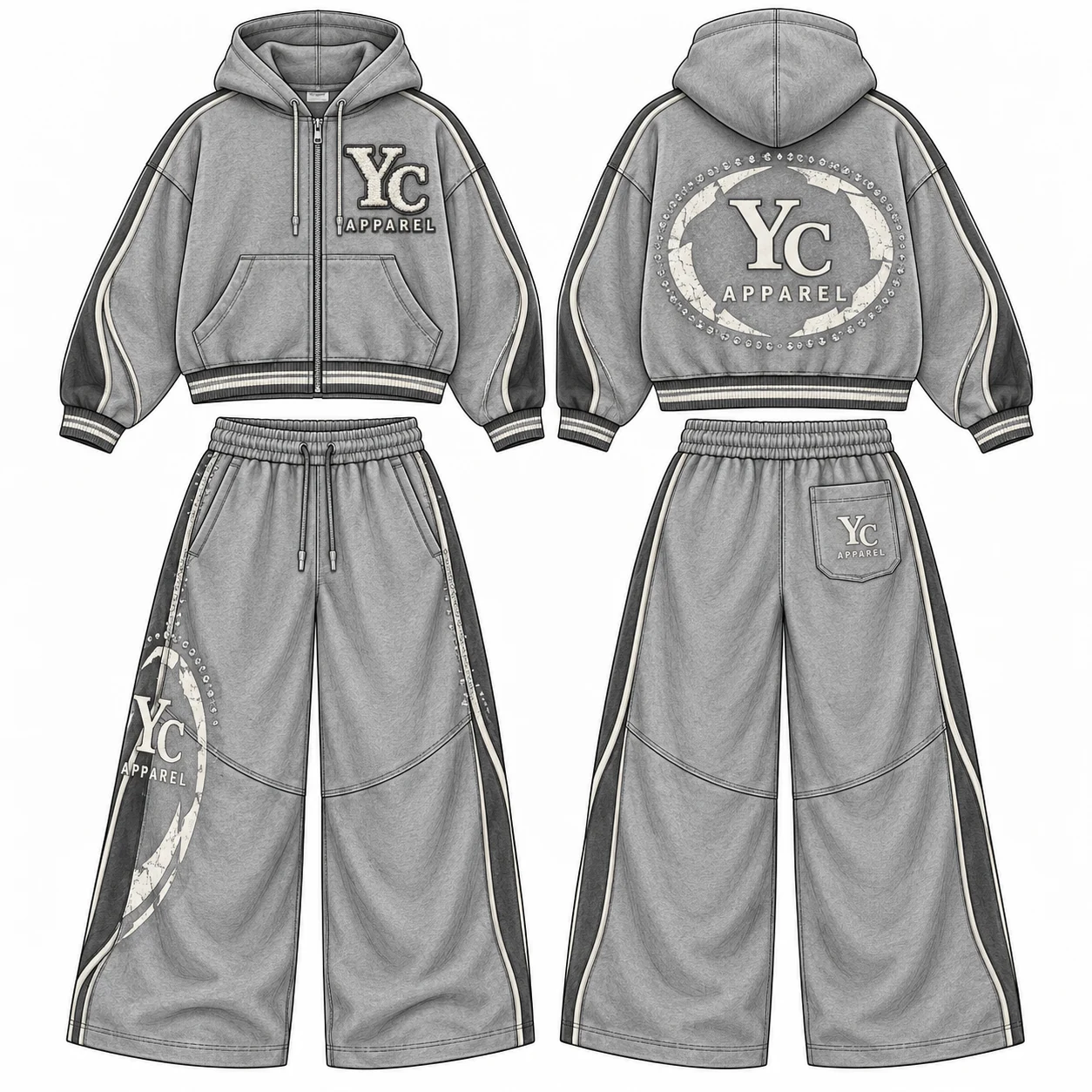
AI-assisted concept. Final construction, print, embroidery and rhinestone details are confirmed through sampling.
The silhouette first.
Then every layer of detail.
A strong reference is a starting point. Define the construction, finish and placement that make the garment yours.
Development focus / Fit
Oversized is a direction.
Measurements make it specific.
Define body length, shoulder width, sleeve shape and hem opening together. Full customization and adjustments to existing fits are both available.
- Bring
- A size chart, fit reference and intended size range.
- Review
- Proportion, movement and how the selected fabric holds the shape.
- Resolve
- Measurement points and fit comments before moving forward.
Development focus / Construction
Let the seams
carry the design.
Map panel shapes, contrasting fabrics and pocket placement as one garment. Complex construction needs clear views of both the outside and the inside.
- Bring
- Front and back drawings, seam lines and detail references.
- Review
- Fabric combinations, seam bulk and the placement of functional details.
- Resolve
- Panel alignment, pocket dimensions and closure specifications.
Development focus / Finish
A worn-in finish.
A clearly defined reference.
Share the fade, contrast and distress placement you want. The appropriate wash or finishing route depends on your fabric and design, and needs project-specific review.
- Bring
- Color and surface references, with close-ups of distress locations.
- Review
- Fabric response, shade variation and the interaction with artwork.
- Resolve
- The target appearance and acceptable variation for the sample.
Development focus / Artwork
Placement matters
as much as the graphic.
Printing and embroidery should be considered alongside fabric, seams and fit. Share the desired hand feel, coverage and positioning for a method review.
- Bring
- Artwork files, dimensions, color references and placement measurements.
- Review
- Detail scale, fabric compatibility and areas that cross a seam.
- Resolve
- Method, placement and finish against the sample.
Specific materials, techniques and combinations are reviewed against your design. The development and production photographs on this page include AI enhancement and are shown for general visual context. Generated garment concepts are identified separately.
Choose the fabric.
Define the finish.
A streetwear brief connects the material, silhouette and surface effect. Set the requirements for each style in the collection.
- T-shirt fabric
- Specify composition, target GSM and a smooth or textured surface. Review how the selected fabric supports the body width, sleeve shape and artwork.
- Hoodie & sweatshirt fabric
- Discuss French terry or brushed fleece, composition and target GSM. Review the face, inner surface and drape against a physical swatch.
- Panels, rib & trims
- Identify contrasting fabrics, rib, pocketing and closures. Review their weight, movement and behavior together, especially when the garment will be washed.
- Wash & artwork together
- Provide a finish reference, print or embroidery dimensions and placement. Approve the combination on the selected fabric rather than treating each effect separately.
Exact material availability and finishing routes are confirmed for your project. Compare weight and handfeel in the fabric GSM guide.
See a direction.
Make it your own.
Concept visuals to help describe shape, texture and construction before developing your own sample.
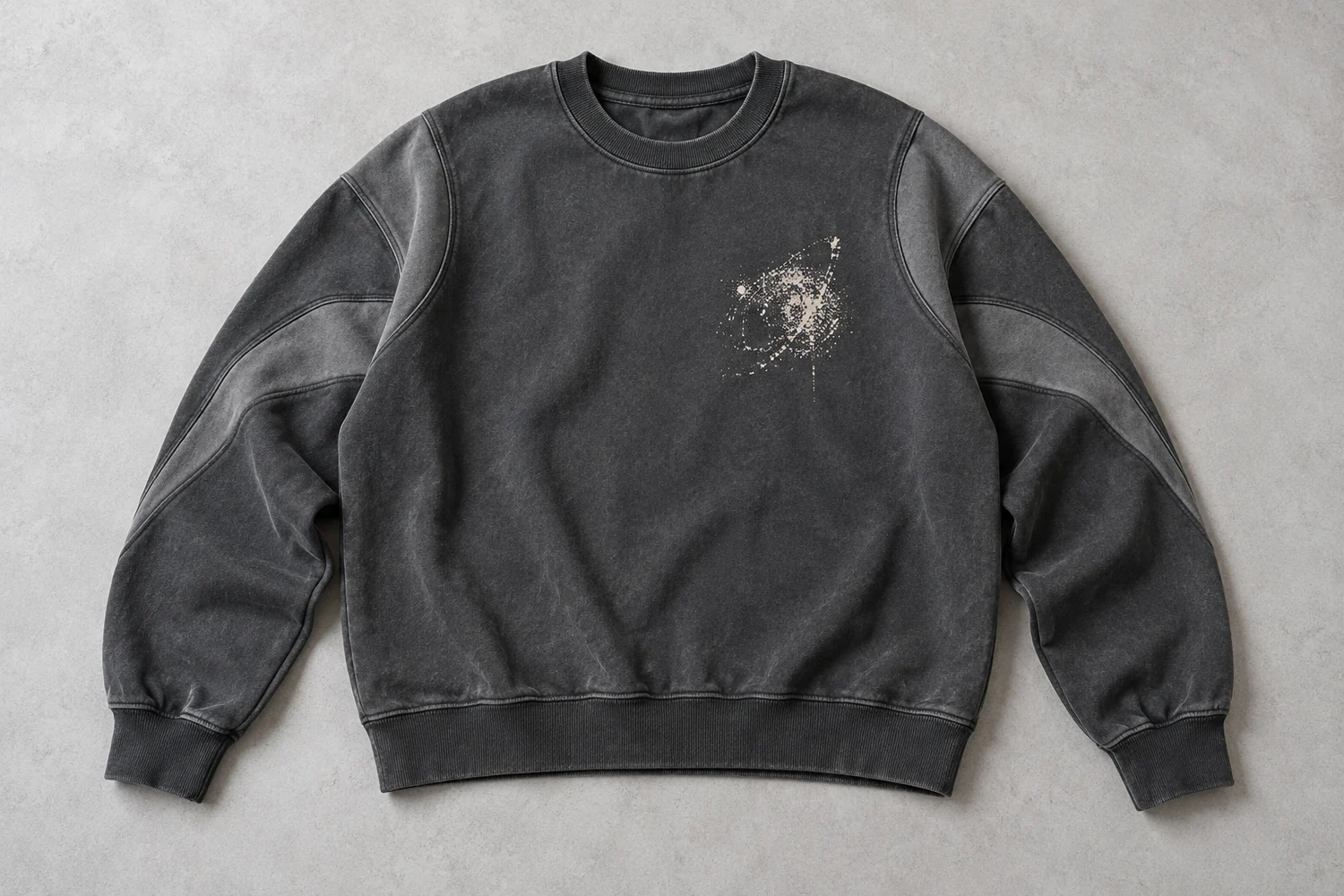
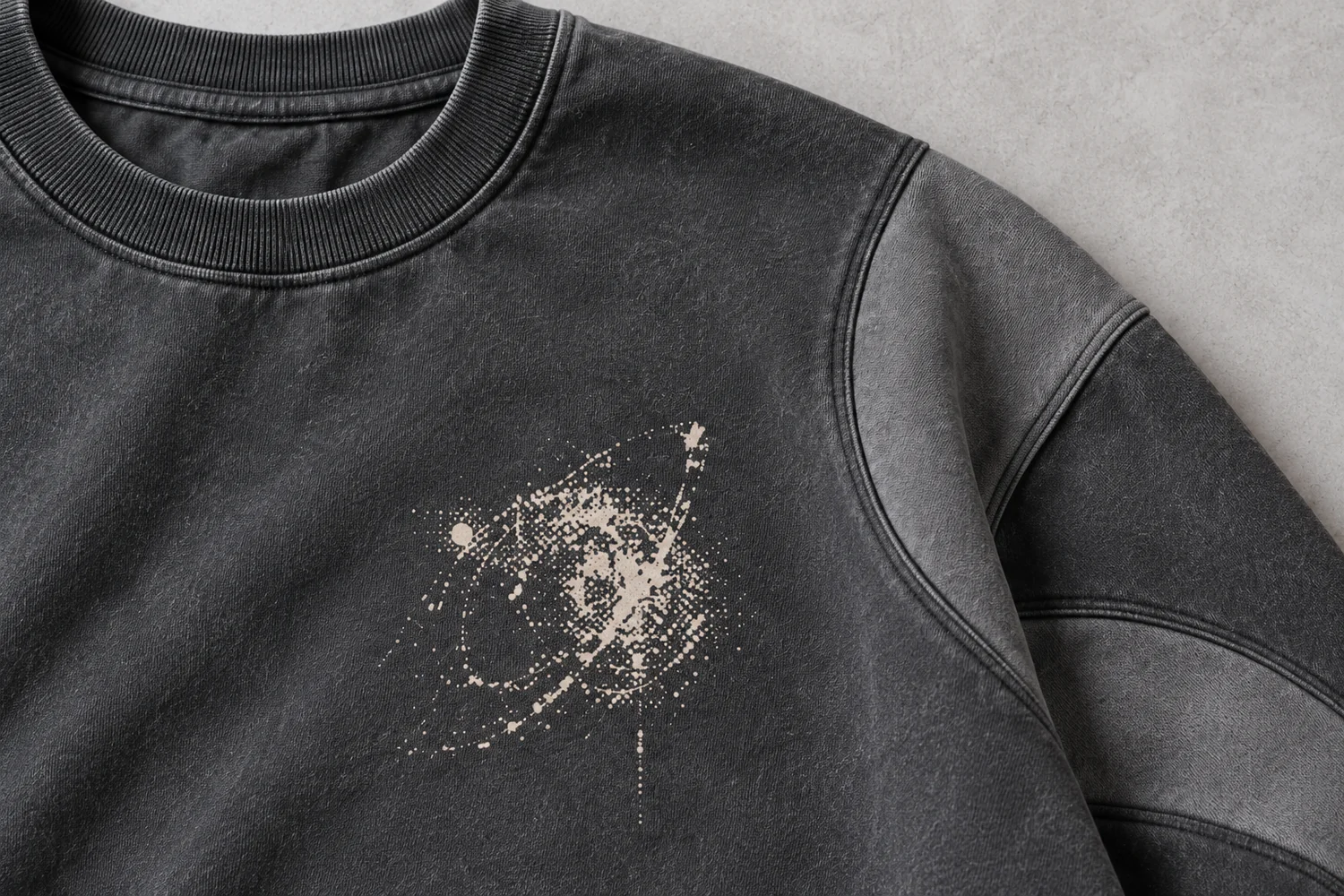
AI-generated design concepts, not photographs of manufactured garments or completed customer orders. They illustrate a possible visual direction; fabric, construction, decoration and feasibility are confirmed for your project through sampling. Open an image to view it larger.
Behind the details.
A look at the real development and production environment, from pattern work to applied artwork.

Pattern development
Turning garment proportions into working patterns.
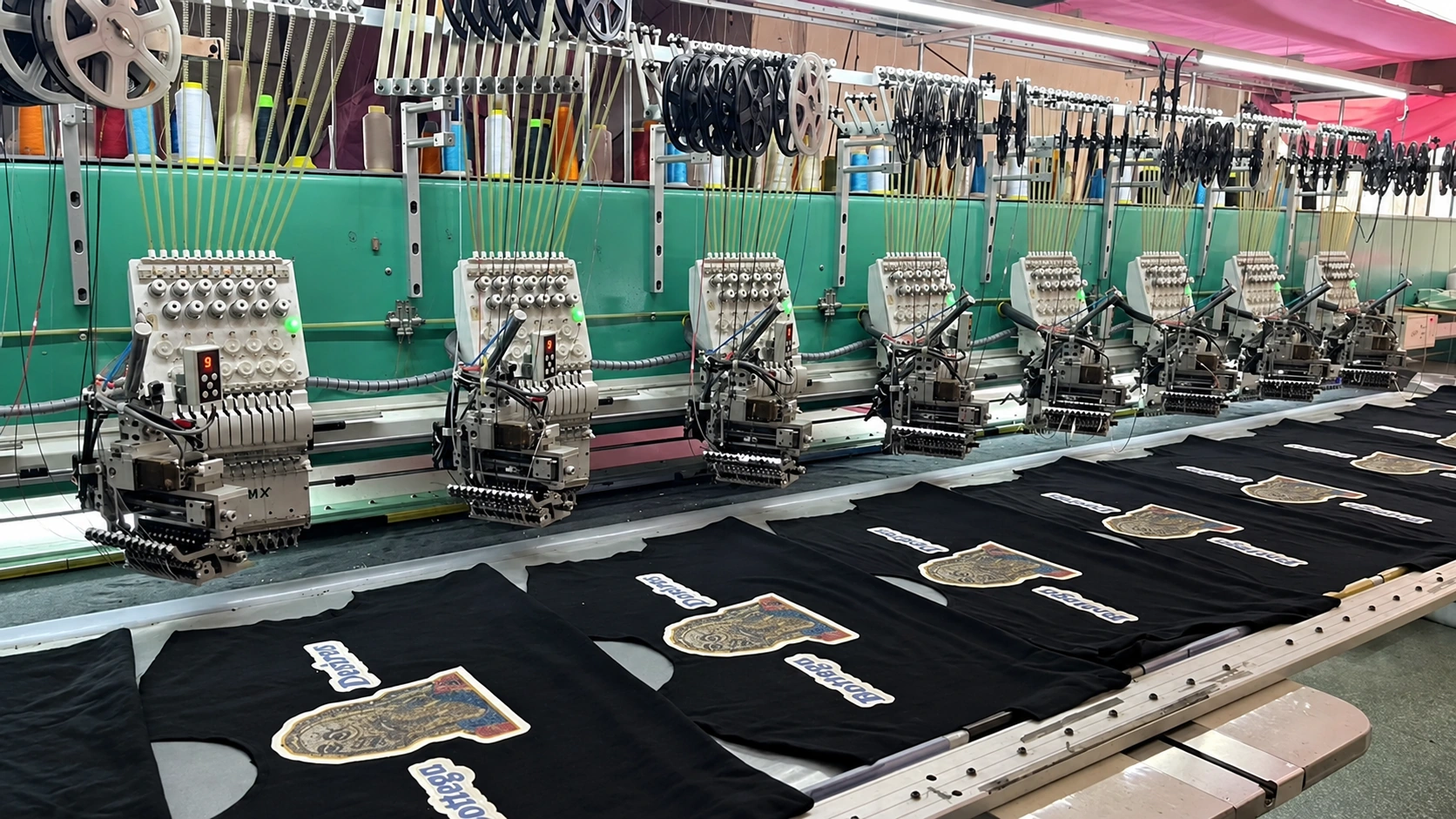
Embroidery
Artwork, scale and placement considered together.
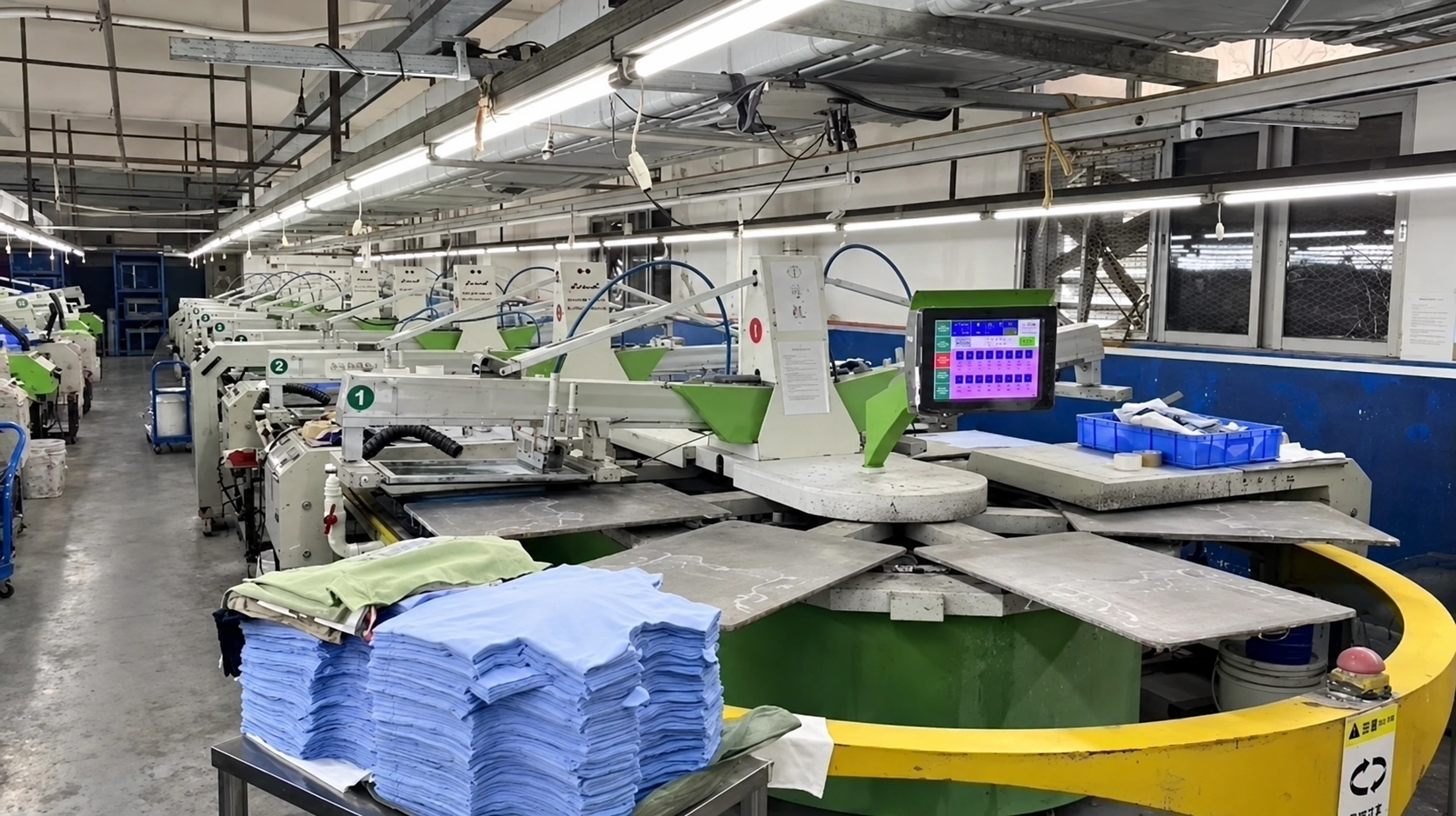
Garment printing
Reviewing the method around the fabric and design.
Full custom development
Build around your own design, fit, fabric and construction requirements.
Adjust an existing fit
Use an existing pattern as the starting point and discuss the changes your brand needs.
Customize blank garments
Discuss decoration and labeling on blank garments, with the base and method reviewed together.
Plan the order.
Agree the timing.
Separate the garment quantity, custom branding and approval stages so your project can be quoted clearly.
- Garment minimum
- 100 pieces per style, per color. Mixed sizes are supported. Each additional style or color has its own 100-piece minimum.
- Size breakdown
- For example, 100 pieces in one style and color can be split into 20 S, 30 M, 30 L and 20 XL. Share your own size mix with the inquiry.
- Labels & packaging
- Custom labels and custom packaging have a 500-piece minimum. Standard clear plastic garment bags are included at no extra charge. Confirm custom specifications, quantities and pricing with your quote.
Sampling: around 15 days
Standard samples usually take around 15 days after design confirmation and payment. Complex designs may need 20–30 days; confirm material availability and the sample scope first.
Approve the sample
Review measurements, panel alignment, seam details, artwork placement and the agreed wash or distress appearance. Record changes and confirm the final specification before production.
Bulk: around 30 days
Agree the production start date against payment, approved specifications and material readiness. Bulk production is usually around 30 days; special finishes and order details may change the schedule.
These are planning estimates. Sample revisions and transport are separate parts of the schedule. Tell us the destination and required arrival date so shipping can be reviewed. See how the development process works.
Before your
next collection.
Quantity, branding and approval details to confirm before starting.
Can different styles or colors be combined to reach the minimum?
The garment minimum is 100 pieces for each style and each color. Sizes can be mixed within that quantity. Separate styles and colors each need to meet the minimum.
What should I send for a design with several finishes?
Send front and back views, measurements, fabric details, artwork dimensions and a reference for each finish. Mark any details that cross panels or seams. We review the combination through sampling before production.
Are custom labels and packaging included?
Custom labels and custom packaging have a 500-piece minimum. Standard clear plastic garment bags are included at no extra charge. Confirm custom specifications, quantities and pricing with your quote.
How long do sampling and bulk production take?
Standard samples usually take around 15 days after design confirmation and payment; complex designs may need 20–30 days. Bulk production is usually around 30 days, with the start date agreed against payment, sample approval and material readiness. These are planning estimates. Revisions, special finishes and shipping can affect the final schedule; confirm your required arrival date with us.
Start with a clear brief
Make your next
piece specific.
Send your collection requirements through the online form. Give each style its own fabric, construction and quantity breakdown.
Mixed sizes supported
What to send for a useful quote
- A separate brief for each style in the collection.
- Front and back views, measurements, panel lines and closures.
- Fabric composition, target GSM and color or wash references.
- Artwork dimensions and placement, including across seams.
- Quantity per style and color, size mix, labels and packaging.
- Destination country and required arrival date.
Mark undecided details as “to be discussed”. You can share a view-only HTTPS link to your tech pack or references in the online form, or send files by email. Read our Privacy Policy before sharing project information.