
01
Start with the change you want to see and feel
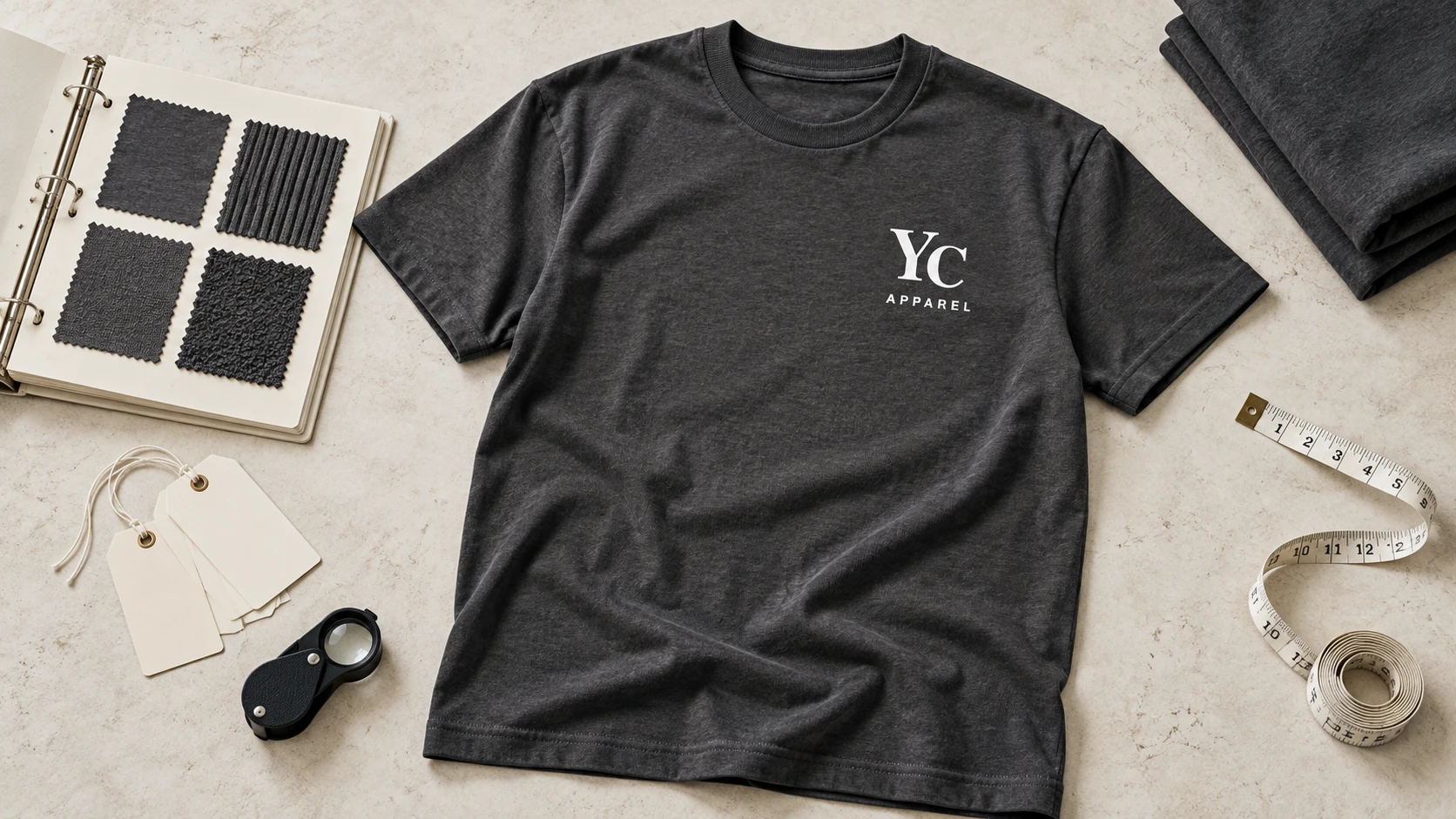
A reference T-shirt may look faded, feel smooth and drape loosely. Those are three separate observations. Sending its photograph with “same enzyme wash” leaves the processor to decide which one matters most. Begin by ranking your goals: less surface fuzz, a softer handle, a specific shade or a particular distribution of worn-looking areas.
For cotton biopolishing, cellulase acts on exposed cellulose at the fabric surface. Novonesis describes removing protruding microfibrils to reduce fuzz and improve surface appearance.[1] That mechanism does not identify the complete color effect in a reference garment.
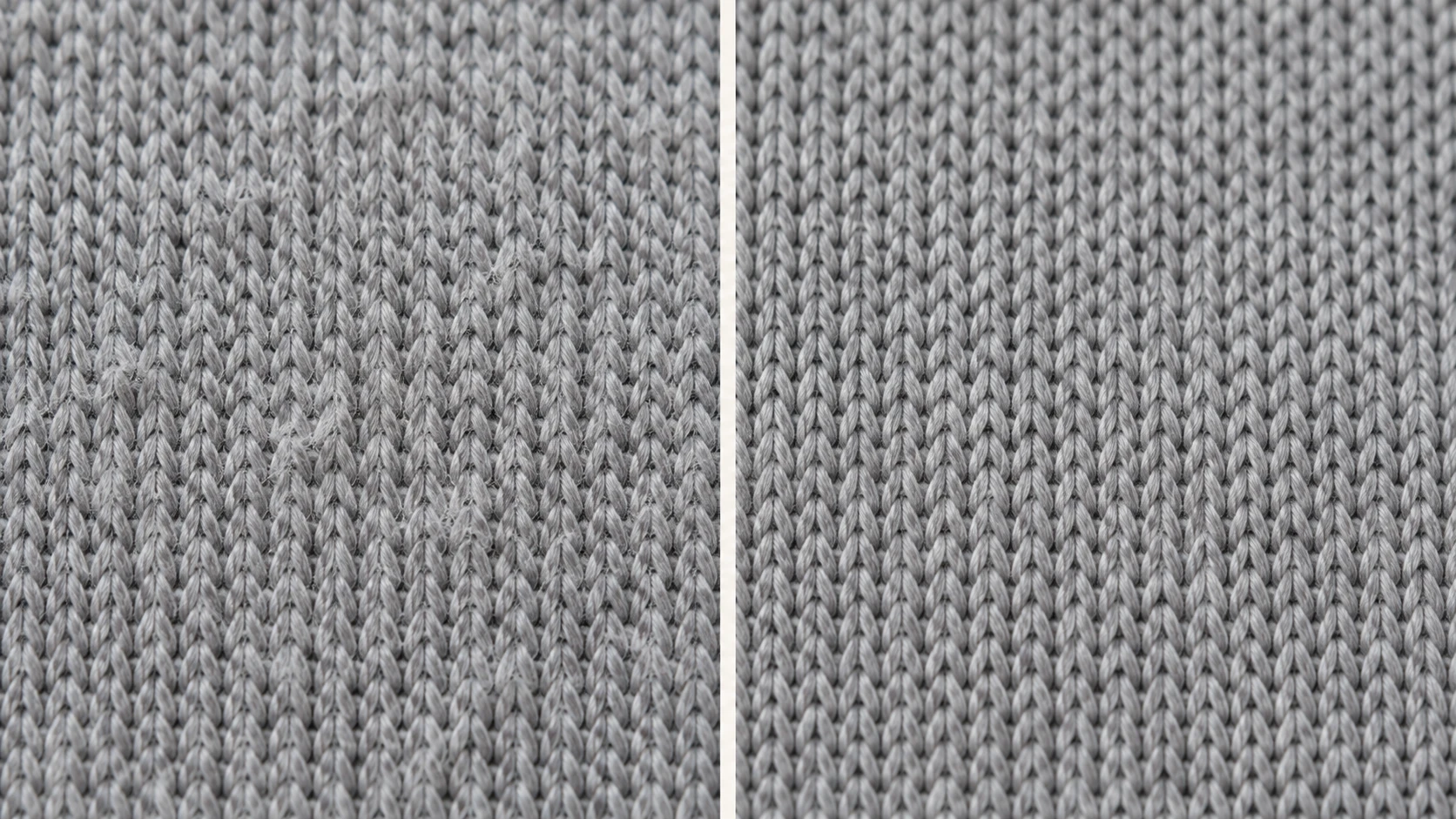
Attach a physical reference when handfeel matters. Identify which part of it is relevant: the body fabric, the neck rib, the shade or the print. If you only have an image, call it a visual direction and leave handfeel approval open until a sample is available.
A useful priority statement: “Reduce visible surface fuzz; preserve the approved charcoal shade and substantial handle. Do not introduce patchy fading.” This is an example brief, not a validated process recipe.
02
Enzyme wash vs acid wash vs silicone wash
These names describe different kinds of decisions. CottonWorks discusses cellulase finishing alongside acid-wash effects in garment processing; its denim examples should not be read as predictions for every dyed knit.[2] Silicone softeners belong to chemical finishing and can change handfeel.[3]
| Term in a brief | What it points to | What to confirm |
|---|---|---|
| Enzyme wash / biopolishing | Enzymatic treatment; cotton surface polishing commonly uses cellulase. | Enzyme purpose, material suitability and the intended surface change. |
| Acid wash | An appearance/process term associated with pronounced, localized color removal. | Actual treatment route, contrast and placement of the effect. |
| Silicone wash / softening | A softening finish intended to modify the handle. | Softener identity, desired feel and compatibility with the finished product. |
“Acid cellulase” is an enzyme classification; it does not mean an acid-wash appearance. Similarly, a silicone-softened sample is not evidence that surface fibers have been removed. A brief can call for more than one treatment, but ask the processor to name each stage and its purpose.[2][3]
Keep coloring separate from finishing. A garment washed after sewing is not necessarily garment-dyed. The garment-dyed guide explains that distinction; this guide focuses on the finish you approve after the material and coloration route are identified.
03
Lock the sample conditions before requesting a trial
Give every trial a fabric code and a garment revision. A sample made from “similar cotton” can help discuss a direction, but it cannot approve the intended material. Record the full composition, construction, color lot and previous finishing history, including anything the supplier has not yet confirmed.
| Record | Include in the brief | Why the buyer needs it |
|---|---|---|
| Material identity | Fabric code, fiber percentages, knit/weave, weight and material lot. | Keeps observations tied to a specific substrate. |
| Color and prior treatment | Shade reference, coloration route and known previous finishes. | Separates a finishing change from a different starting material. |
| Complete assembly | Body, rib, thread, seams, labels and decoration references. | Makes the trial representative of the garment being ordered. |
| Process sequence | Which treatments occur before/after sewing, printing and final drying. | Prevents approval of a sequence different from production. |
| Effect and limits | Priority target, unacceptable changes, assessment method and decision owner. | Gives the reviewer a reason to approve, revise or hold. |
The processor should select and document the recipe for that material. CottonWorks identifies variables including enzyme type, time, temperature, pH, mechanical action and auxiliary chemistry.[2] A buyer can request a trial revision ID without copying a recipe from an unrelated fabric or assuming that the same process name fixes every variable.
For blends, ask which component the proposed enzyme is intended to act on and how the remaining components will be assessed. Do not transfer a cotton-only approval to a new blend, new rib or new decoration by changing the label on the brief.
04
A cleaner surface still needs a strength check
One 2015 study treated bleached 160 g/m² cotton single jersey with two cellulase products across 27 conditions per product. Bursting strength was measured using ISO 13938-1:1999. Reported losses varied substantially within each product’s trials.[4]
Reported bursting-strength loss
Range across conditions in one published experiment
The experiment also reported improved pilling performance. These findings illustrate a tradeoff, not a universal ranking of acid and neutral enzymes. The ranges are not predicted losses for your garment, and their endpoints are not acceptance limits.[4]
For your development, agree both the required finished strength and how any change from the baseline will be reviewed. Retaining most of a weak starting value may still leave an unsuitable fabric. Ask the laboratory to identify the relevant test, units, sample preparation and reporting basis.
ASTM D3786/D3786M describes diaphragm bursting testing for textiles, including knits.[5] It is one method to discuss with the laboratory; it is not interchangeable with every strength test, and it was not the method used in the study above. Keep comparisons within an agreed method rather than comparing numbers from different reports.
Do not approve a finish solely because it feels softer or looks cleaner. Record the appearance decision and the performance decision separately.
05
Check a full garment, not just a swatch
A swatch is useful for screening the surface direction. Before bulk approval, review a representative assembled garment that follows the intended finishing and decoration sequence. Identify the material, sample size, treatment revision and date on its record. Retain an untreated control from the same starting lot where practical.
| Check | Compare or record | What closes the decision |
|---|---|---|
| Surface and hand | Fuzz, smoothness, fullness and feel against named references under consistent conditions. | Approved physical reference and agreed acceptable variation. |
| Shade and appearance | Overall shade, panel variation and any intended or unwanted contrast. | Agreed viewing conditions and accepted shade/effect references. |
| Dimensions and shape | Defined measurement points after finishing, then after the agreed care sequence. | Measurement report against the product’s own tolerances. |
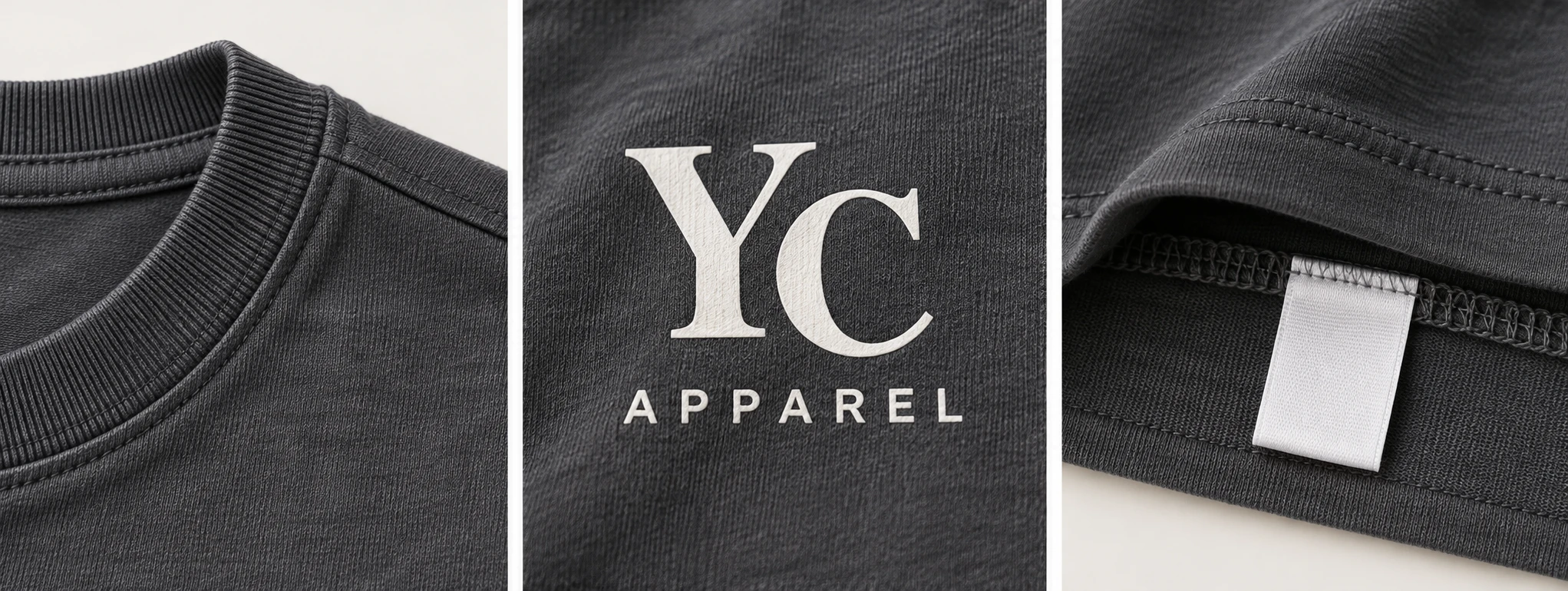
| Garment details | Rib recovery, seam appearance, print edges and label condition. | Documented observations plus relevant performance checks. |
| Fabric performance | Strength and, where relevant, pilling or other end-use requirements. | Traceable reports with methods and agreed acceptance criteria. |
Review samples dry and under consistent conditioning and lighting. Photograph the whole garment and repeat the same close-up positions. Pictures are useful for communicating where to look; they do not replace touching a handfeel reference or reading a test report.
Record “after finishing” and “after consumer care” as separate states. AATCC TM150 addresses garment dimensional change after home laundering, with applicability limitations for certain stretch garments.[6] Agree the care procedure and number of cycles with the laboratory. For measurement baselines and shrinkage calculations, use the preshrunk cotton and shrinkage guide.
06
Approve a range you can communicate
Avoid writing “same as sample” without identifying the sample. Assign a reference code, keep matching retained references with the buyer and processor, and state which characteristics each one controls. A handfeel reference from one garment and a shade reference from another are workable only when that division is explicit.
From reference to repeatable approval
- Define the targetRank surface, handfeel and shade goals. State unacceptable changes.
- Compare traceable trialsHold material identity and review conditions constant; record each process revision.
- Resolve the tradeoffsCheck the full garment and agreed reports. Keep unresolved items on hold.
- Freeze the approval recordName the approved reference, acceptable range, recipe revision and sign-off owner.
For a deliberately variable appearance, agree the lightest and darkest acceptable references and where variation is allowed. Do not use “vintage effect” to approve any degree of patchiness. For a clean solid appearance, record unwanted variation just as clearly.
If a sample misses a requirement, describe the observation before asking for a process change: “Body feels too limp compared with reference H1” is more actionable than “use less enzyme.” Let the processor propose a revision, then repeat the relevant checks. Changing the material, chemistry or sequence should trigger a documented review of the affected approval.
Ask how the processor will transfer the selected trial to the intended production equipment and load, and how bulk samples will be compared with the approved reference. Agree this before the order is released; an attractive development sample alone does not document batch consistency.
07
Write an enzyme-wash brief the processor can answer
Use the editable worksheet to collect references, material details, the intended sequence and the approval evidence. Blank fields remain unconfirmed; the worksheet does not calculate a recipe or issue an automatic pass. Export your record to continue later or share it with the team.
Example request: “For fabric F1 in charcoal, prioritize a cleaner surface while retaining the hand of reference H1. Keep shade within approved references C1–C2. Trial the final body/rib/label/print assembly using the proposed production sequence. Return the identified sample, dimensions and agreed performance reports before approval.” These identifiers are fictional; replace them with your own records.
If you are preparing a development inquiry, send the material specification, physical effect reference and ranked priorities with the brief. Mark missing information as pending so the next response can resolve a specific question. You can discuss the garment development brief with Yuchen Apparel once those references are ready.
Enzyme-wash finish & sample approval brief
Fill in the record, export it to continue later, or print your completed brief. No account is required.
Open the editable worksheet ↗Download blank text brief08
Questions buyers ask about enzyme washing
Does enzyme wash always make clothing look faded?
No. Surface polishing and a faded color target are separate requirements. Name the desired shade and distribution of the effect, then review a sample made from the intended material.
Is enzyme wash the same as acid wash?
No. A named enzyme treatment and an acid-wash appearance do not specify the same thing. Ask the processor to identify the actual route; “acid cellulase” alone does not request a mottled acid-wash effect.[2]
Can I request both enzyme and silicone finishing?
You can put both into a proposed brief, but the processor must confirm suitability and sequence. Evaluate the complete finish against your surface, handfeel and performance requirements rather than approving each name separately.
Can I approve the finish from photographs?
Photographs can help review visible direction and placement. They cannot establish handfeel, finished dimensions or strength. Keep those approvals tied to physical samples and traceable records.
Is there one safe strength-loss percentage for every enzyme-washed garment?
No universal percentage is established by the sources used here. Set product-specific criteria with the technical team and laboratory, including the finished strength needed for the intended use.
Sources & further reading
Sources checked 17 October 2026. Technical sources distinguish finishing mechanisms. The research chart describes one published experiment; test-method scopes do not establish a universal garment acceptance limit.
- Novonesis — Cellusoft for cottonManufacturer explanation of cellulase biopolishing and surface-fiber removal. Product descriptions are not evidence of a result on your garment.
- CottonWorks — Garment FinishingExplains enzyme processing, acid-wash terminology and process variables, largely in a denim context. Denim appearance effects cannot automatically be assigned to cotton jersey.
- CottonWorks — Chemical FinishingDescribes softeners, including silicones, and their effect on fabric hand. It does not define a single universal silicone-wash result.
- M. G. Uddin (2015) — Effects of biopolishing on the quality of cotton fabrics using acid and neutral cellulasesPrimary study used bleached 160 g/m² cotton single jersey. Chart redraws reported bursting-strength-loss ranges across its treatment conditions, not garment acceptance limits or Yuchen test results.
- ASTM D3786/D3786M-18(2023) — Diaphragm Bursting Strength Tester MethodPublic scope describes diaphragm bursting resistance for textile fabrics. This is a possible method to discuss with a laboratory, not the method used in the cited 2015 study.
- AATCC TM150-2025 — Dimensional Changes of Garments after Home LaunderingPublic scope covers garment length/width change after home laundering; it may not apply to certain stretch garments. It does not provide a universal passing tolerance.