
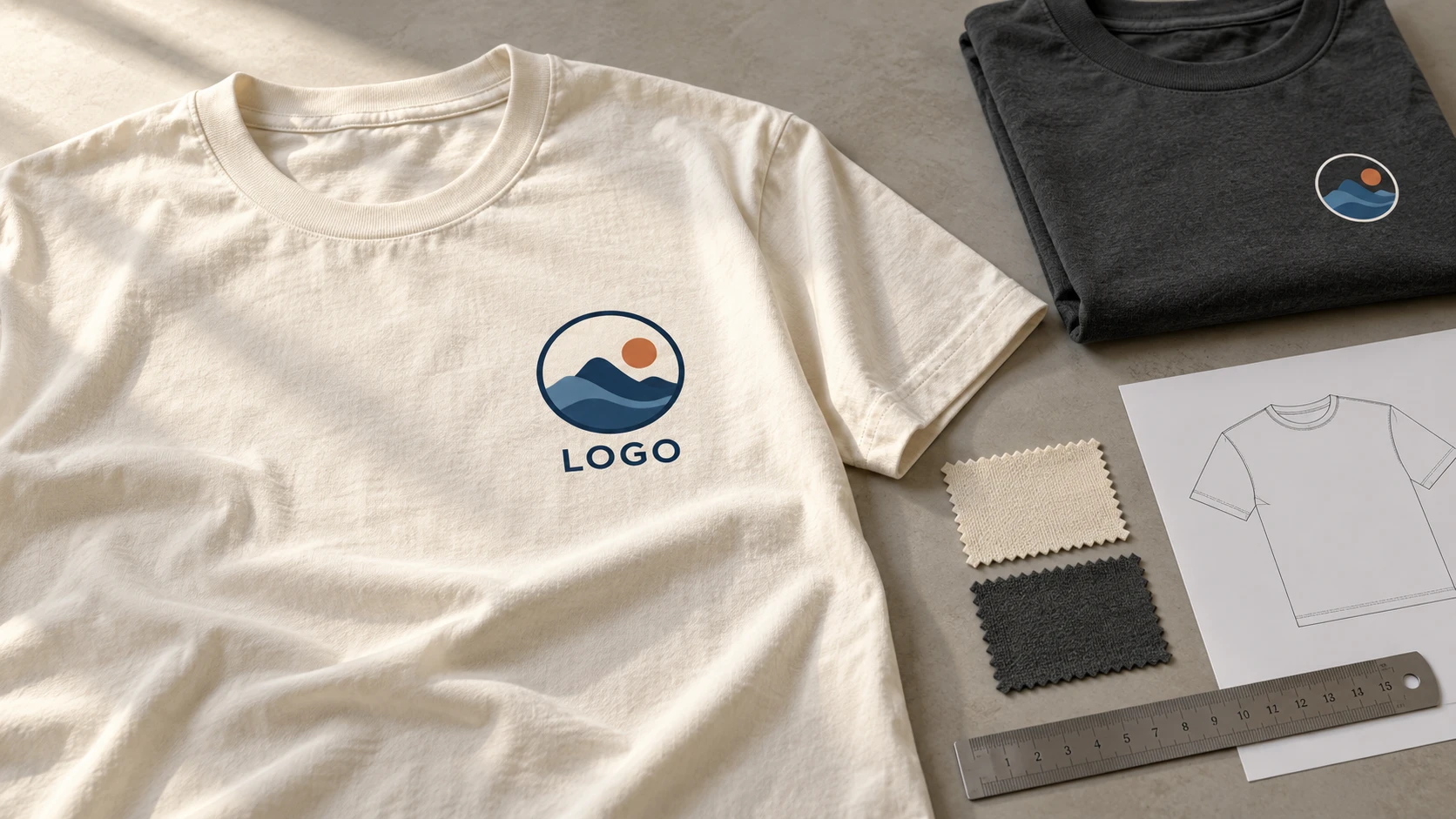
01 / Choose what to test first
DTF vs screen printing vs DTG: start with your actual brief
Use these seven checks to compare the proposals. The shortlist matrix below then connects them to your product priorities.
| Check | What to compare | Evidence to request |
|---|---|---|
| 1. Application | Film transfer, ink through mesh, or inkjet directly onto fabric. | The proposed process, including pretreatment and curing where required. |
| 2. Fine detail | Lines, isolated dots, transparent edges and small text at final size. | A sample from the same artwork revision and print dimensions. |
| 3. Color | Screen-ink color matching and digital ink-set gamut on the garment shade. | The finished print against an agreed physical color reference. |
| 4. Hand and coverage | Flexibility and comfort across the actual decorated area. | A physical sample; a small logo does not establish the feel of a large graphic. |
| 5. Fabric compatibility | The exact composition, finish, garment color and any heat sensitivity. | Compatibility confirmation and a trial on the intended material. |
| 6. Total cost | One-time charges plus applied decoration cost at the same quantity. | Matched quotation scope, currency, inclusions and exclusions. |
| 7. Approval and care | Appearance, hand and changes after the agreed care review. | Identified before/after samples and agreed acceptance criteria. |
A useful comparison starts with the same artwork revision, finished print size, garment, color and quantity. Ask each supplier to quote that brief and identify any changes needed. Otherwise, a cheaper offer may describe a smaller graphic, a different blank or fewer print locations.
Use the matrix below to shortlist a process for sampling. It reflects how the methods work, not a guaranteed quality ranking. The decorator’s equipment, materials and execution still matter.
| Your priority | Start the discussion with | Confirm before approval |
|---|---|---|
| Repeated logo with a few defined colors | Screen printing, particularly when setup can be spread across a repeat run. | Separations, any underbase, finished color and the full quoted quantity. |
| Detailed multicolor image on a cotton tee | DTG and DTF samples; include a screen-print proposal if the volume supports it. | Small detail, color rendering, white areas and hand on the intended garment. |
| One design across several fabric types | A compatible DTF system as a candidate. | Each fabric, finish and color—not just one successful transfer. |
| Large chest graphic with a soft feel | A physical comparison of suitable DTG, screen-ink and transfer options. | Coverage, flexibility and comfort at the actual print size. |
| Names, numbers or frequently changing artwork | Digital routes such as DTF or DTG. | File handling, variable-data charges, placement and turnaround. |
This is an editorial purchasing framework. No order-size threshold here is a Yuchen MOQ, and a process name alone does not establish durability.
02 / Understand what reaches the garment
DTF vs screen printing: how the image is applied
DTF means direct-to-film in this guide. Epson calls its workflow DTFilm: the design is printed onto transfer film, adhesive powder is applied and cured, and the image is heat-pressed onto fabric. The carrier is then removed according to the material’s instructions.[1] This is different from printing directly onto the garment.

Screen printing uses prepared mesh screens to pass ink onto the garment. DTG, or direct-to-garment, jets ink directly onto the textile. Brother describes the extra preparation involved in screen separations and registration, while DTG works within the printer’s ink-set color gamut.[2]
For purchasing, ask what is included after the image is printed: transfer application, pretreatment where needed, curing, inspection and any agreed care testing. A quotation for loose DTF transfers is not comparable with a quotation for decorated, inspected garments.
03 / Match the process to the image
Compare detail, color and coverage—not just the number of colors
For a simple logo, specify the intended color reference and ask how it will be matched on the selected fabric. Screen printing can use specifically mixed colors; digital output depends on the available ink gamut.[2] Neither a monitor preview nor a color name replaces approval of the finished print.
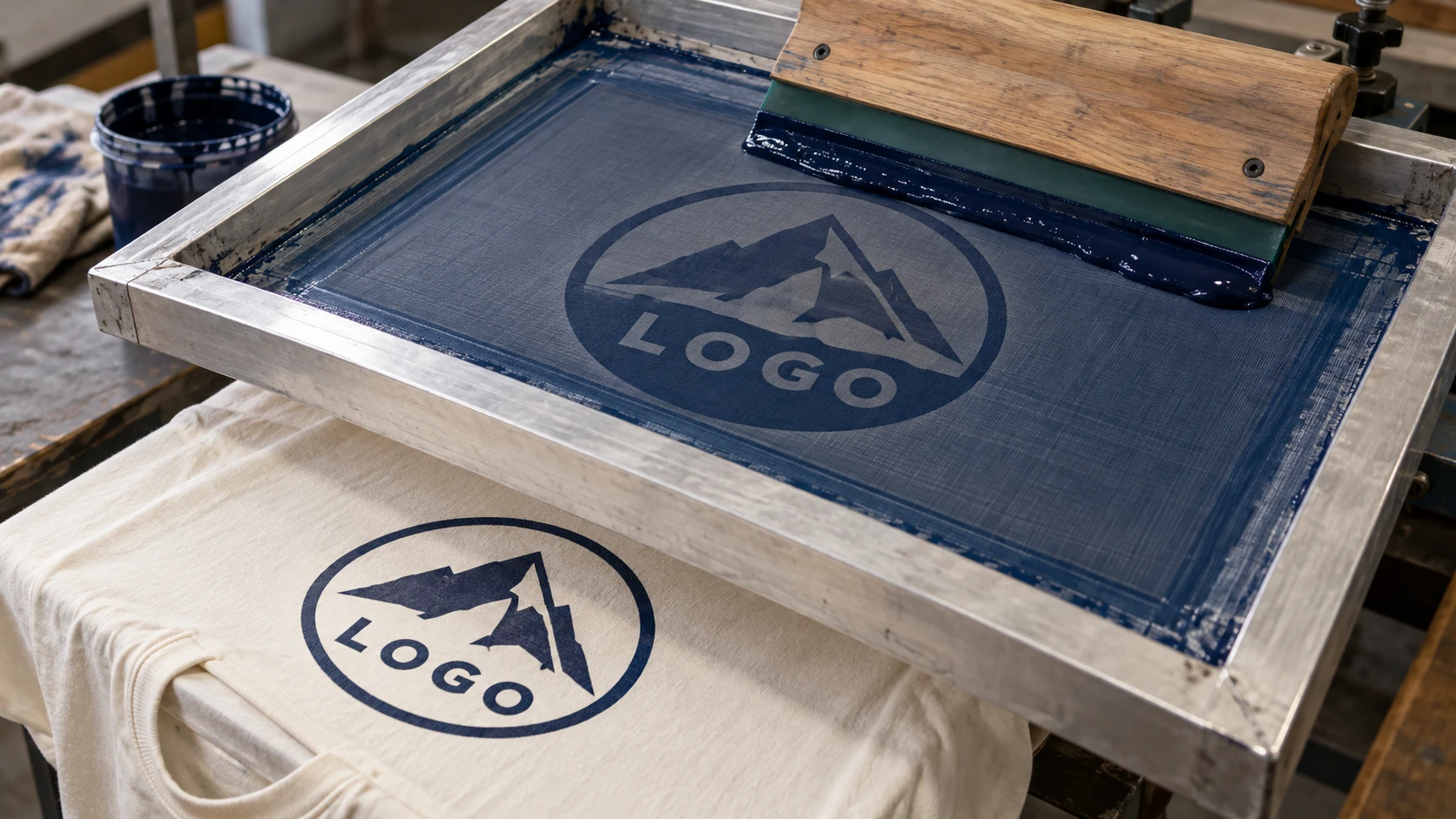
Gradients do not automatically rule out screen printing
ScreenPrinting.com demonstrates full-color CMYK screen printing using halftone separations. Its example also explains why transparent process inks behave differently on light and dark backgrounds.[4] Ask the decorator to propose the separation method and show a sample; do not assume every screen-printed image needs one screen for every visible shade.
Inspect the file at finished size
Keep a single approved master file and a dimensioned placement drawing. Ask for process-specific handling of fine lines, isolated dots, transparent edges, gradients and white areas. If the supplier needs to simplify detail or add a background, approve that change before sampling.
For raster artwork, confirm the required resolution at the final print dimensions. Enlarging a small file does not recover missing detail. For vector artwork, provide fonts as agreed and keep color references separate from screen previews. A mockup is useful for placement; the production file is needed for the print itself.
Judge hand at the actual coverage
A small open logo and a large solid graphic can feel very different even when produced by the same method. Compare the printed area while the garment hangs, bends and is worn as intended. Check whether the result feels acceptable across the chest, rather than judging a small corner swatch alone.
Screen printing is not a single ink feel: Avient offers water-based systems specifically intended to retain a soft fabric hand.[8] That product direction is a reason to request the ink specification and a sample, not evidence that every screen print will feel identical.
04 / Confirm the complete material system
Use the real fabric, finish and garment color
Give every supplier the same material code, composition, finished weight, color and finish. Include any garment dyeing or washing and its proposed position in the production sequence. Approval on a white cotton swatch does not approve a dark polyester hoodie.

| Material or condition | Ask the decorator |
|---|---|
| Cotton / cotton-rich jersey | Which ink or transfer system is proposed, and what preparation does it need? |
| Polyester or polyester blend | Is this exact fabric supported? How will dye migration and heat response be checked? |
| Dark garment with light artwork | How will opacity, any white underbase and the final hand be approved? |
| Stretch, coatings or performance finishes | What evidence supports adhesion, movement and care compatibility on the actual material? |
| Seams, pockets, zips or unusual positions | Can the area be loaded and decorated consistently using the proposed equipment? |
DTG is not limited to pure cotton in every system. Epson has documented polyester DTG pretreatment for specified printer/ink combinations.[3] Ask for the exact supported route instead of treating that capability as universal.
DTF can be a useful candidate across different substrates, but it still needs an application trial. Confirm fabric heat tolerance, surface finish, transfer compatibility and the proposed press conditions. Keep care instructions tied to the finished garment and decoration together.
STAHLS’ notes that polyester dye migration can occur during decoration or later, and that dye stability can vary between fabric lots.[6] Agree when the sample will be evaluated and retain its material identity. Do not assume an opaque white layer is automatically a validated dye barrier.
05 / Compare the same commercial scope
DTF vs screen printing cost: compare your actual quantity
Ask for setup charges and the applied-decoration price per garment separately, or confirm that both are included in the quoted total. Match the artwork, dimensions, locations, garment colors and quantity split. Separate sample fees, extra colors, underbases, file work and reorders where they change the price.
The example below uses invented quotations to explain the arithmetic. It is not market pricing, a factory offer or a minimum order recommendation. Assume one unchanged design and location, identical blanks, and a constant unit rate over the illustrated quantities.
| Example route | One-time setup | Applied print / piece | 50 pieces: total | 100 pieces: total | 250 pieces: total |
|---|---|---|---|---|---|
| DTF | $20 | $4.00 | $220 | $420 | $1,020 |
| Screen printing | $120 | $2.80 | $260 | $400 | $820 |
| DTG | $30 | $5.20 | $290 | $550 | $1,330 |
Here DTF has the lower decoration total at 50 pieces; screen printing has the lower total at 100. That reversal comes from the invented setup and unit prices. Real quotations may have price bands, minimum charges and different production constraints, so obtain a fresh quote when quantity changes.
Interactive comparison · fictional values prefilled
Put three quotes on the same basis
Use one currency for every amount. Unit prices must include application to the garment. Enter zero only when a charge is explicitly zero or already included.
Total = one-time charges + quantity × decoration per piece
Effective decoration / piece = total ÷ quantity
Excludes garment cost, freight, tax and any unentered charges. Prices are assumed constant at the entered quantity. Bars share a zero baseline; their scale adjusts to the largest total. Lowest cost is not a quality or process approval.
For a repeat order, confirm whether setup is charged again, how artwork and color references are retained, and whether stored transfers or screens remain usable. Also compare the confirmed schedule and replacement terms. A small unit saving is difficult to evaluate when the delivery scope is unclear.
06 / Make the comparison physical
Approve samples using the same review conditions
Request the same artwork at the same finished size on the same garment and shade. Label each sample with its process, material/lot, artwork revision and date. If a supplier changes the design, record the change so it is visible in the comparison.
- Inspect the image: small text, fine lines, gradients, color, opacity, registration and edge quality.
- Handle the garment: assess flexibility, surface feel, distortion and the printed area in normal wear.
- Review process evidence: ask how the selected system’s application and curing requirements are controlled.
- Review care results: retain an unwashed reference and agree washing, drying, cycles, evaluation timing and acceptance criteria before testing.
Avient’s ink-curing guidance explains why ink temperature, time, fabric and deposit matter; the dryer setting alone does not describe the whole cure. It also identifies limits to interpreting stretch tests across different inks and fabrics.[7] A quick stretch video is therefore insufficient evidence for a broad durability promise.
Record fading, cracking, edge lifting, loss of adhesion and garment changes separately. AATCC TM61 addresses colorfastness to accelerated laundering.[5] Its public scope does not provide a universal lifetime guarantee for these three processes. Agree the relevant methods and acceptance criteria with the supplier or laboratory.
Use the clothing sampling guide to connect decoration approval with fit, construction and the final garment. Keep the approved sample and production specification linked.
Build the garment brief alongside the decoration brief. Our T-shirt fabric sourcing guide covers the base cloth. For other effects, compare puff print artwork and sampling or embroidery and screen printing before requesting a different sample route.
07 / Send one brief to every supplier
Use a shared print quotation and sample checklist
Include the artwork file/revision, dimensions, placement, garment specification, colors, quantities, desired hand, color reference and care requirements. Ask each supplier to identify the proposed system, required changes, quotation scope and sample lead time.
Free working template
Compare the proposal, the price and the sample
Keep three supplier or process proposals together. The sheet separates unconfirmed requirements from observed sample results and records the next action.
Works offline. Entries are not sent or saved automatically. Export your notes before closing.
Save the offline sheet ↓Choose the decoration with the garment
Explore custom T-shirts or streetwear development, then share your artwork, material and quantity. Ask the team to confirm which decoration route is feasible for your project.
Discuss your artwork and sample brief →DTF vs screen printing and DTG: common questions
Is DTF better than screen printing?
It depends on the image, material, quantity, hand and available production route. Compare matched quotations and physical samples; a lower setup charge does not establish a better finished product.
Which printing method lasts longest?
There is no reliable universal ranking without the actual ink/transfer system, garment, application and care conditions. Request comparable testing and review observed failures rather than a generic wash-count claim.
Is screen printing always cheaper for bulk orders?
No. Setup can be spread across more pieces, but artwork complexity, locations, materials, labor and price bands still affect the quotation. Recalculate the actual scope at the actual quantity.
Do these printing methods set the garment MOQ?
No. Decoration economics and a custom garment’s production minimum are different questions. Confirm the style/color minimums, size mix, material availability and decoration terms with the supplier.
Sources and technical references
Official equipment, ink and decoration suppliers and the standards body were checked on 17 October 2026. Their guidance supports the specific process facts cited; the purchasing workflow is editorial guidance. All quotation figures are invented teaching inputs.
- Epson: DTG & DTFilm workflow and FAQsFilm, adhesive, curing and transfer stages. Equipment-vendor guidance, not universal fabric compatibility.
- Brother: How DTG differs from screen printingScreen preparation, direct inkjet printing and color-gamut differences. Its illustrative order quantities are not adopted as minimums.
- Epson: Polyester DTG pretreatment2018 announcement documenting polyester support for specific printer/ink combinations; not a claim about every DTG system.
- ScreenPrinting.com: Full-color CMYK screen printingSupplier demonstration of halftone separations and substrate-color considerations, February 2026.
- AATCC TM61: Colorfastness to Laundering—AcceleratedPublic purpose and scope only; the full paid method was not reviewed. No universal print-lifetime or acceptance limit is inferred.
- STAHLS’: Dye-migration considerationsSupplier explanation of polyester dye migration and lot variation, 2013. Product promotion is not used as a general performance guarantee.
- Avient / Wilflex: Ink Curing Tips2020 technical guide on curing conditions and the limits of basic cure checks. No universal cure recipe is taken from it.
- Avient: Zodiac Aquarius Soft BaseExample of a water-based screen-ink system designed for soft hand; not comparative test data.