
01
Separate color change, staining and rubbing transfer
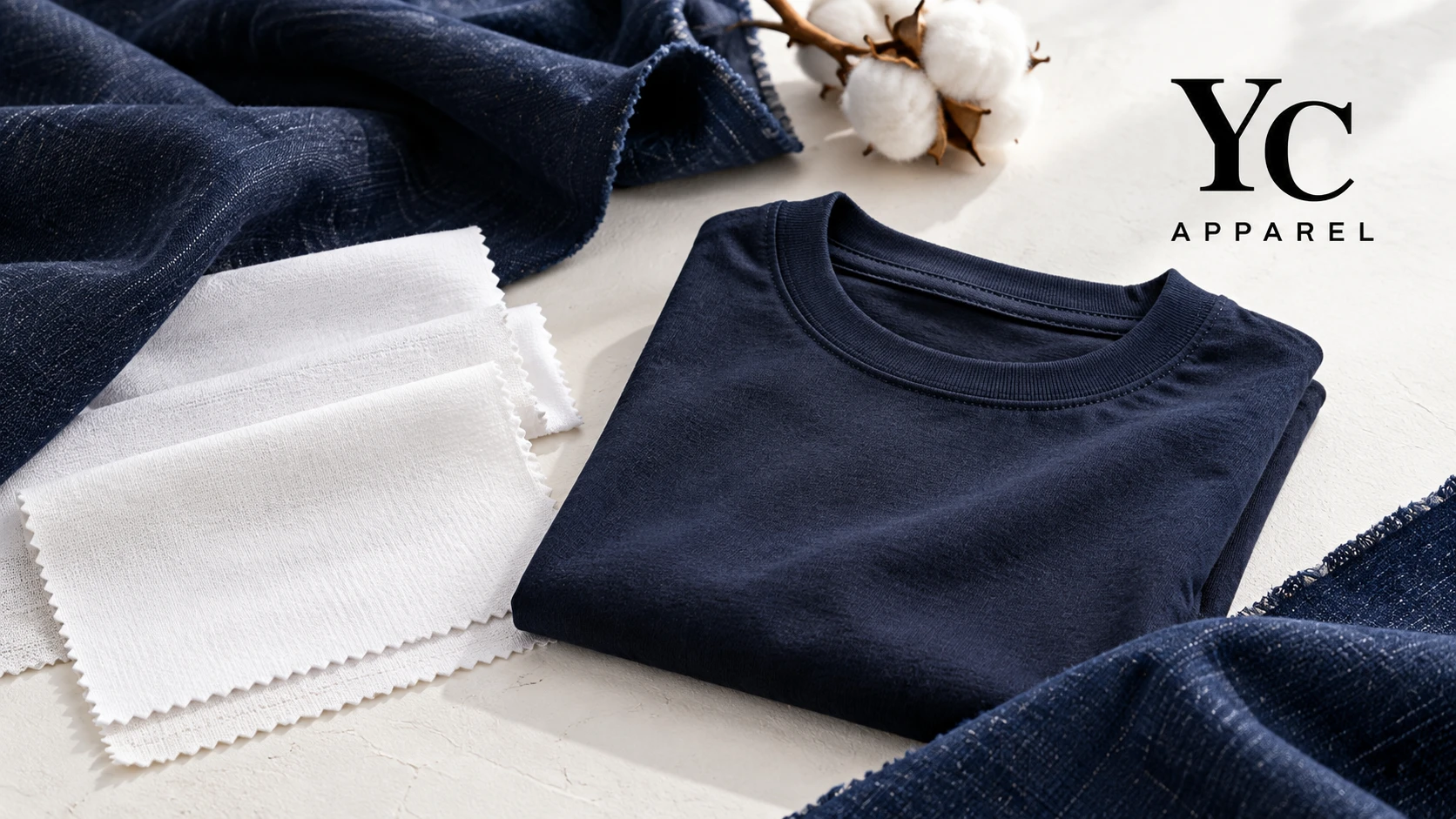
Color change describes a difference in the tested material itself. Staining describes color transferred to an adjacent material. Crocking is transfer by rubbing. A dark body fabric might retain its visual depth while marking a white contrast panel; that is why a photograph of the body alone is insufficient.
AATCC TM8 addresses transfer from rubbing and includes dry and wet test conditions. TM61 addresses accelerated laundering under specified conditions.[1] [2] Neither name means that all aspects of garment color performance have been approved.
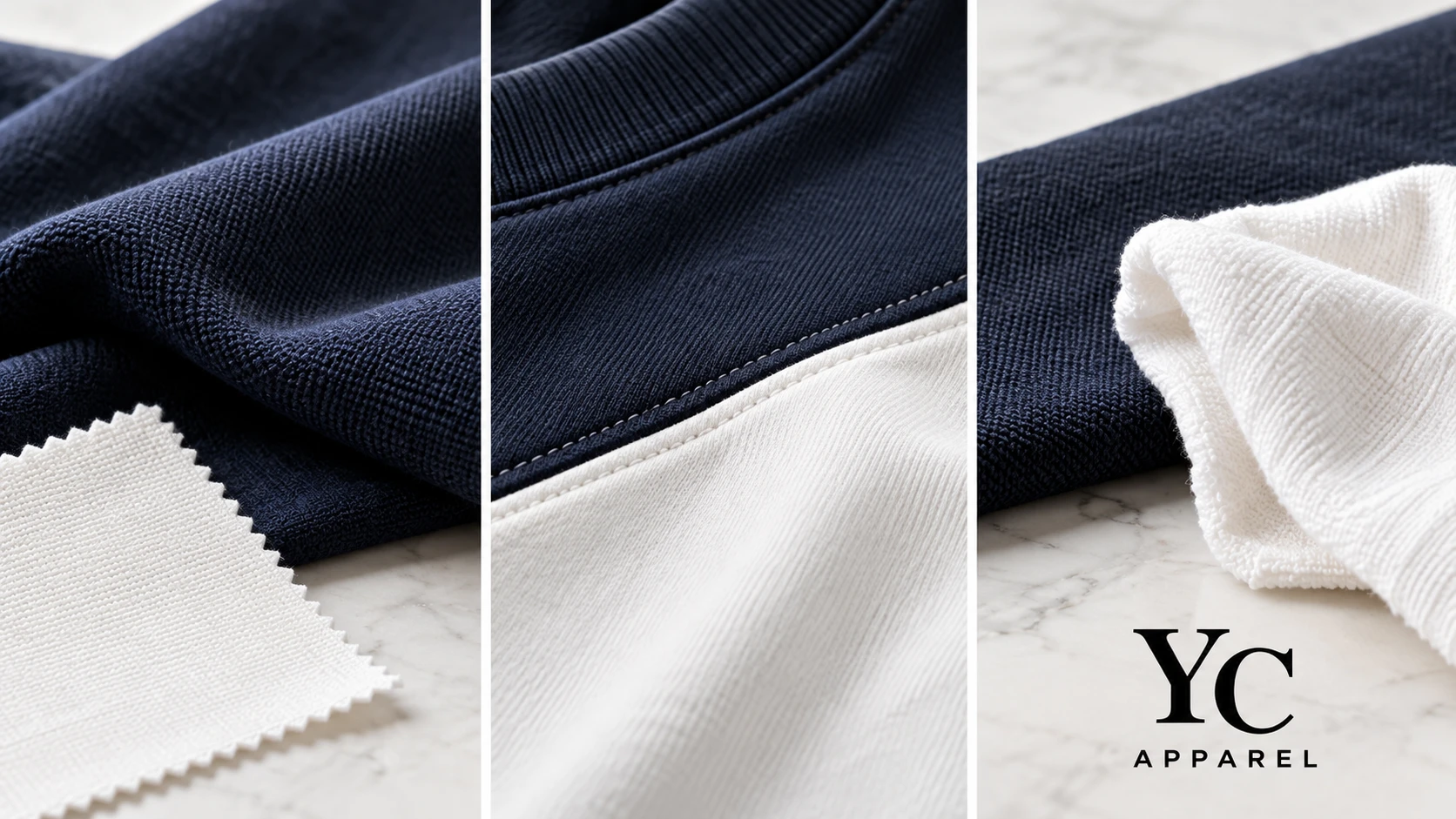
Ask which parts of the design create contact: a white neck rib against a navy body, pale embroidery against a red base, or a light bag against a dark sweatshirt. These observations help the laboratory choose a relevant test plan; they do not replace the laboratory procedure.
| Question | Result to identify | Missing information to challenge |
|---|---|---|
| Did the original color change? | Color-change assessment | Procedure and evaluation scale |
| Did another material pick up color? | Staining assessment, by relevant adjacent fiber | Which adjacent material was evaluated |
| Did rubbing transfer color? | Dry and wet rubbing results separately | Rubbing method and specimen condition |
| Does the shade match the target? | Color approval against a reference | Lighting, reference ID and approval status |
02
Write a brief around the finished design
List the body, rib, print, embroidery, lining and labels that will contact each other. Record each material and color lot. If the laboratory receives only a body-fabric swatch, say which garment questions remain unanswered. A report on an earlier dye lot should not silently approve a new lot.
Identify the intended care route and market. Ask the laboratory to recommend the applicable method, specimen preparation and evaluation approach. Specify whether you need testing before a treatment, after the final finish, or after a defined preliminary laundering sequence. Otherwise, two reports may describe different starting points.
Request individual results rather than a summary badge. Where a method uses graded scales, keep the scale name with the grade. A color-change grade and a staining grade describe different observations even when both are expressed numerically.[3]
03
Read a report from identity to conclusion
Begin with the specimen description, not the pass box. Match the submitted material, color and lot to your purchase order. Then read the method edition, options and departures. Check that the report answers the brief you actually sent.
Next review each reported endpoint and its evaluation scale. A blank field is not a pass. If staining is reported against multiple adjacent fibers, preserve those separate observations instead of reducing them to a single average. Ask the laboratory to explain any result that cannot be connected to a stated specimen and condition.
Finally compare the results with the acceptance agreement. The laboratory may report a grade without making a commercial acceptance decision. Conversely, a supplier may mark “passed” using a limit that your team never approved. Keep the technical result and the buyer’s decision in separate fields.
Four checks before accepting a report
- IdentityCorrect style, component, color and lot.
- ProcedureNamed method, edition, options and conditioning.
- ResultsSeparate color change, staining and dry/wet rubbing as applicable.
- DecisionCompare with the agreed criterion and record who approved it.
04
A dark-body / white-rib example
Imagine an illustrative navy T-shirt with a white neck rib. The body shade matches the approved standard, but a wash trial shows visible discoloration on the rib. Do not reopen the shade-match question as though it explains the transfer. Preserve the affected garment, identify the component lots and ask for a targeted investigation.
The next trial might examine a revised material or processing route proposed by the supplier. Keep the assembly, care conditions and evaluation method consistent so the comparison is meaningful. If the revised rib is a different fiber blend, note that change: it may affect both the design and the interpretation of the result.
Approval should cover the finished combination. A good result for a dark fabric alone does not automatically resolve transfer onto every pale material used beside it. The example is an investigation pattern, not a claim that this combination always fails.
| Shortcut | Why it is incomplete | Better instruction |
|---|---|---|
| “Grade 4 minimum” | The method, endpoint and scale are missing. | Name each required result and its criterion. |
| “Wash-tested” | The sequence and specimen are unclear. | Identify the finished sample and exact procedure. |
| “No fading” | It ignores staining and contact transfer. | Define appearance change and transfer separately. |
| “Same as last order” | Lots and finishes may differ. | Link the new order to relevant evidence. |
05
Do not turn a laboratory cycle into a lifetime promise
Accelerated testing is designed around specified conditions. It is not permission to advertise a garment as surviving an arbitrary number of consumer washes. AATCC’s TM61 scope describes an accelerated assessment, not a universal service-life guarantee.[2]
Keep customer-facing statements narrower than the evidence. Record the actual test and approved result internally; avoid translating it into “never fades,” “never stains” or “safe with every white garment.” Those statements require evidence the report may not contain.
If a failure is reported after delivery, collect the garment identity and care history without assuming misuse. Compare those facts with the original test scope. A repeated, traceable issue can justify a new test plan even if a previous sample passed.
Connect the laboratory findings to the garment inspection record so color results and visible finished-garment observations remain traceable without being treated as the same test.
06
Colorfastness test request and review sheet
Define the garment combination, requested endpoints and acceptance owner before sending samples.
Use a separate result line for every method and endpoint. Attach the original report; this working record should summarize it without replacing it. Keep unresolved specimen or method mismatches visible until the laboratory clarifies them.
Colorfastness test request and review sheet
Complete the working record, export it to continue later, or print your entries. No account is required.
Open the editable record ↗Download blank text brief07
Questions buyers ask
Does matching a Pantone reference prove colorfastness?
No. A color reference supports the intended appearance. Durability and transfer require their own evaluation under stated conditions.
Can I compare grades from two reports?
Only after checking that their methods, options, scales, specimen conditions and reported endpoints are comparable. Matching numbers alone are insufficient.
Should every garment use the same pass grade?
Set criteria for the product, use and market with the technical team. This guide does not prescribe a universal grade for all fibers, colors or constructions.
Sources & further reading
Sources checked 18 October 2026. The notes below identify what each source supports. Editorial examples, planning assumptions and illustrations are not supplier test results or official acceptance limits.
- AATCC TM8 — Colorfastness to Crocking: CrockmeterPublic scope for color transfer by rubbing; verify edition and exact procedure with the laboratory.
- AATCC TM61 — Colorfastness to Laundering: AcceleratedAccelerated laundering method scope. An approximation under specified conditions is not a lifetime durability claim.
- AATCC — Standard Test Methods and ProceduresOfficial method and evaluation-procedure directory; names identify different measurements rather than interchangeable grades.