

01
Separate pills, fuzz and shedding before discussing a fix
A complaint that a sweatshirt “looks worn” is too broad for a material decision. Inspect the surface under consistent light and describe what is visible. Are there attached fiber balls, a raised fuzzy halo, loose fibers on other clothing, or a combination? Keep close-ups and an unaffected reference from the same material where possible.
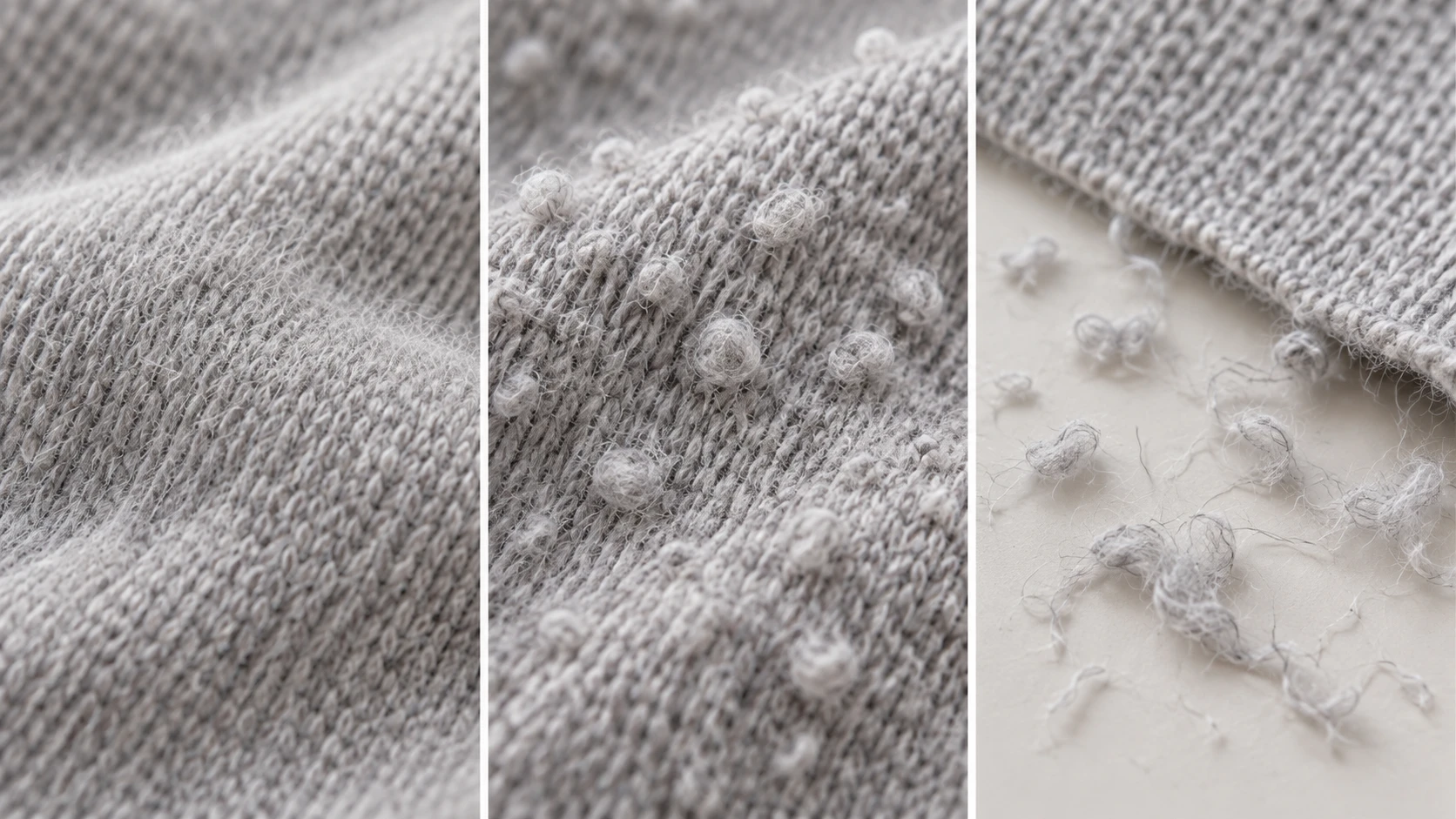
| Observation | What to record | Do not assume |
|---|---|---|
| Fuzzing | Raised fibers and where the surface changed | Every fuzzy finish is an unintended defect. |
| Pilling | Attached fiber balls, location and appearance | A photograph establishes a formal test grade. |
| Shedding | Detached fibers and what they transfer onto | Shedding and pilling are the same result. |
A brushed fleece may intentionally have a raised surface. Compare it with the approved appearance before treating all fuzz as failure. Conversely, a deliberate brushed finish does not remove the need to assess unwanted pills or excessive shedding. Record the face being evaluated: the outer face and brushed inner face serve different purposes.
02
Look at the whole fabric, not one fiber claim
Fiber characteristics, yarn construction, fabric structure and finishing can all influence pilling. ASTM D3512 also notes that actual wear varies with the wearer and use conditions.[1] “Cotton,” “polyester blend,” “combed” or a higher GSM therefore cannot stand alone as a performance acceptance rule.
Start with the exact nominated material. Record composition, yarn specification, construction, mass, color and finish, including brushing, washing or other processing. If a supplier offers an alternative, compare its full specification and relevant results. A similar touch or weight does not establish equivalent surface behavior.
Ask where appearance matters most in the finished product. An everyday hoodie worn under a backpack, a light jersey tee and a brushed lounge set have different contact patterns and expectations. Use that context to plan the assessment with the supplier or laboratory, rather than choosing a fashionable test name without an end-use question.
Keep the claim narrow. A result on one color and finish is evidence for that identified sample under its stated conditions. It is not automatic proof for every shade, later bulk lot or revised finish. Decide which variants need further checks with the technical team.
03
Read the method before comparing the grade
“Pilling grade 4” is missing information. The report should name the method and edition, sample identity, preparation, exposure or assessment stage, evaluated face and rating procedure. Confirm any washing or other treatment before testing. A number without that context is difficult to use in an approval decision.
| Reference | Approach named in the public scope | Buyer action |
|---|---|---|
| ISO 12945-1:2020 | Pilling box method | Confirm the agreed preparation and assessment stages. |
| ISO 12945-2:2020 | Modified Martindale method | Specify this exact method rather than just “Martindale.” |
| ASTM D3512/D3512M-22 | Random tumble pilling tester | Review the method’s precision limitations with the laboratory. |
ISO publishes separate parts for the pilling box and modified Martindale approaches.[2][3] A change of apparatus or procedure can change the meaning of the result. Keep method and condition consistent for a direct comparison; otherwise ask the lab what conclusions are justified.
Also separate pilling from abrasion resistance. The ASTM textile directory lists distinct pilling and abrasion methods.[4] “Martindale tested” does not tell you which property was assessed, and an abrasion result is not a substitute for a pilling evaluation.
ASTM D3512 cautions against using its procedure for acceptance testing because of poor between-laboratory precision.[1] If the buyer and supplier propose it for a commercial requirement, have the testing provider explain the limitations and agree how conflicting results will be handled. Do not silently turn any available report into an absolute pass/fail guarantee.
04
Use a grade as an appearance category, not a percentage
In ASTM D3512, ratings run from 5 for no pilling to 1 for very severe pilling.[1] This is an ordered appearance scale. A grade of 4 is not “80% pill-proof,” and the difference between 4 and 3 is not a measured percentage reduction in durability.
Read a report in this order
- IdentityWhich exact fabric, finish, face and sample?
- ProcedureWhich method, edition and preparation?
- StageAt what agreed exposure or assessment point?
- DecisionDoes it meet the pre-agreed appearance requirement?
Do not use the illustrative macro image in this article as a grading reference. Formal assessment uses the references and procedure required by the selected method. Phone exposure, magnification and lighting can make a surface look materially different, even before differences in fabric color are considered.
Nor does a laboratory exposure provide a universal conversion into months of wear or washes. Real contact, care, garment fit and user behavior differ. A report can support a specified performance statement; it does not justify an unsupported “never pills” claim.
Where a result sits close to an agreed requirement, follow the pre-agreed decision and retest procedure. Keep the original report and any repeat result together. Selecting the best-looking photograph or highest repeat grade after the fact conceals the uncertainty instead of resolving it.
05
Write the acceptance brief before samples arrive
Use a short material-performance brief linked to the tech pack and purchase specification. The buyer and technical team should agree a suitable requirement for the product. This guide does not prescribe a universal minimum grade, exposure count or test interval.
| Field | A useful instruction |
|---|---|
| Material identity | Style, fabric code, color, finish, lot and nominated reference |
| Property and face | Pilling / fuzzing / matting as relevant; identify face or back |
| Procedure | Named method, edition, preparation and assessment stages |
| Requirement | Agreed appearance criterion and decision rule |
| Evidence | Report, specimen references, date and relevant images |
| Change control | Which substitutions or process changes require review |
For a supplier comparison, use the same request for each candidate. If one report covers unwashed fabric and another covers a washed garment panel, record the mismatch before ranking them. Ask for a comparable assessment if the distinction affects the buying decision.
Choose samples that represent what you intend to buy. A beautifully finished development swatch can be useful for setting a target, but it does not by itself establish that the bulk finish is controlled. Link the approved reference to the material lot and process instructions used for production.
If the material is already in stock, retain the original lot information. A new sample from a later run may answer whether the revised process works, but it cannot explain the condition of an earlier delivery without further evidence.
06
When a sample disappoints, investigate before changing everything
Preserve an untreated reference and document the affected area. Confirm whether the concern is pilling, fuzzing, shedding or a combination, then review the actual material and processing history. Avoid trimming or shaving the only failed specimen before it has been assessed.
Ask the supplier which controlled change is proposed and why it should address the observation. Possible investigations may involve yarn selection, construction or finishing. They are trial directions, not guaranteed fixes. Changing several factors at once should be recorded as a combined material revision.
Compare the revised material under the agreed conditions and recheck the other requirements that matter: handle, appearance, dimensional behavior, color and manufacturing suitability. A smoother-looking surface is not a complete approval if the change alters the intended hand feel or other performance.
| Record | Example of a clear entry |
|---|---|
| Observation | Attached pills concentrated on the outer side-body area |
| Identity | Sample P01; fabric and finish revision recorded |
| Proposed change | Trial a documented finish revision; retain reference P01 |
| Closure evidence | Comparable assessment plus garment appearance review |
For a finished-garment concern, keep the care history and use account alongside the material review. Do not blame laundering or the wearer without evidence. Equally, do not present an accelerated laboratory result as a complete reconstruction of an individual customer’s experience.
07
Build a pilling assessment brief
The editable worksheet captures the nominated material, observation, method, test stages, requirement and follow-up decision. It leaves the acceptance criterion blank so your team can set a product-specific requirement with the supplier and testing provider.
Use it alongside your quality review process or send a material brief for discussion. Include the actual report and sample references. The worksheet organizes the evidence; it does not calculate a test grade or certify a fabric.
Fabric pilling assessment brief
Fill in the record, export it to continue later, or print your completed brief. No account is required.
Open the editable worksheet ↗Download blank text brief08
Questions clothing buyers ask
Does 100% cotton mean a fabric will not pill?
No. Fiber content alone does not establish the behavior of the complete fabric and finish. Review the nominated material under a suitable agreed method.
Can two grade-4 reports be compared directly?
Only after checking method, preparation, assessment stage, face and other relevant conditions. The shared number alone is insufficient.
Can a pilling result tell me the garment’s lifespan?
It does not provide a universal conversion into wears, washes or months. Keep any product claim within the evidence available.
Should I use a fabric shaver before submitting the failed sample?
Preserve the original affected condition for investigation. Removing the pills can erase evidence needed by the technical team.
Sources & further reading
Sources checked 17 October 2026. Public standards scopes explain applicability; use the agreed full procedure through a qualified testing provider where relevant.
- ASTM D3512/D3512M-22 — Random Tumble Pilling TesterPublic scope, rating direction, variables and limitations of between-laboratory precision; not a prediction of service life.
- ISO 12945-1:2020 — Pilling box methodMethod family for surface pilling, fuzzing and matting assessment using a rotating pilling box.
- ISO 12945-2:2020 — Modified Martindale methodA separate method for propensity to surface pilling, fuzzing and matting.
- ASTM — Textile standards directoryLists pilling and abrasion methods separately; method names must be matched to the property requested.